
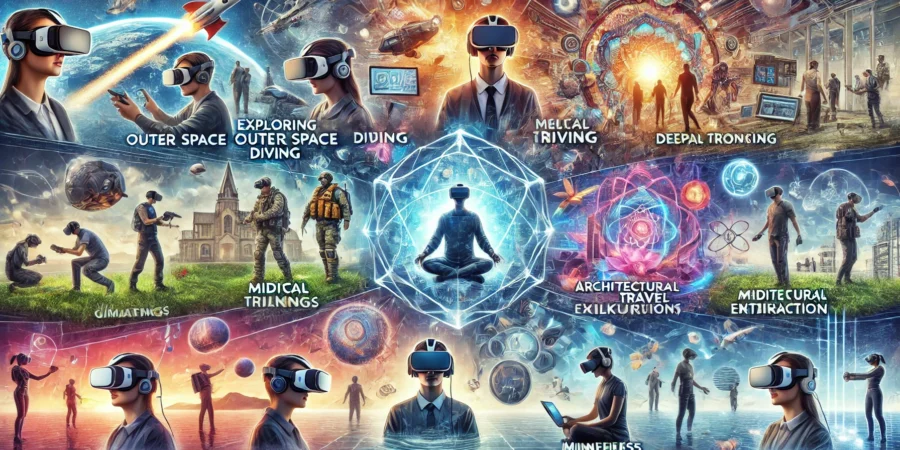
Virtual Reality (VR) experiences offer an extraordinary fusion of technology and emotion, immersing users in captivating digital worlds that feel incredibly real. By completely replacing your physical environment with lifelike 3D simulations, VR engages your senses and emotions in profound and surprising ways. Whether stepping inside thrilling games, exploring distant lands, learning new skills through simulation, or forging connections in virtual social spaces, VR experiences powerfully evoke feelings ranging from excitement and joy to empathy and awe. This transformative medium not only reshapes entertainment but also revolutionizes education, training, therapy, and collaboration—highlighting its vast potential to impact how we live, learn, and connect.
VR completely replaces your surroundings with a digital 3D environment, typically via a head-mounted display. It enables users to look and move around freely in a simulated world, often with hand controllers for interaction. VR experiences can range from games and social spaces to training simulations. They are known for eliciting intense excitement, wonder, and a powerful sense of presence as you feel “teleported” elsewhere.
- VR Gaming: VR gaming places players inside the game world for high-adrenaline fun. Using motion-tracked controllers, you can swing swords, fire bows, or dodge attacks with your whole body. For example, in Beat Saber – a hit VR rhythm game – players slash flying blocks to music in a neon world. The excitement and flow state it creates are intense, as you physically move to hit beats in time. VR games often evoke emotions of thrill and joy, and even competitive adrenaline in multiplayer modes.
- VR Simulation Training: Beyond entertainment, VR provides realistic simulations for learning and practice. These range from flight simulators to workplace training modules. In medicine, for instance, surgeons use VR training platforms like Osso VR to practice procedures in a lifelike 3D operating room. Trainees can repeatedly perform a virtual surgery, gaining skills with no risk to patients. Such experiences inspire focus, confidence, and mastery – a novice surgeon might feel anxiety turn into determination as they improve their technique in VR. Professional VR simulations are used in aviation, manufacturing, and the military as well, where they safely recreate high-stakes scenarios. The immersive realism improves retention; users often report feeling fully present in the task, as if it were real.
- VR Education (Virtual Field Trips): Educators use VR to transport students to places they could otherwise only read about. With a VR headset, a class can take a virtual field trip to the Great Barrier Reef or Mars, fostering curiosity and wonder. For example, Google’s VR Expeditions (now part of Arts & Culture) allowed students to roam inside the International Space Station or visit ancient Rome in 360°. One student described feeling “like I actually travelled” after exploring a VR rainforest. These experiences trigger emotions of amazement and discovery, making learning memorable. They can also build empathy – standing in a historical scene or distant community can help learners feel the human context behind lessons.
- VR Social Worlds (Metaverse): VR isn’t always a solo experience. Social VR platforms like VRChat let people meet in virtual worlds using avatars. Friends (or strangers) can hang out in a VR lounge, play mini-games, or attend virtual events together. The feeling of social presence – making eye contact via avatars and hearing 3D voice audio – creates real camaraderie and laughter. A user might feel friendship and amusement as they explore a user-created VR world or participate in a quirky group activity. These shared spaces often spark creativity too, since users can build their own environments. VR social worlds aim to trigger joy, belonging, and curiosity (you never know who or what you’ll encounter next).
- VR Narrative Experiences: Some VR experiences focus on storytelling rather than gameplay. These immersive narratives can feel like stepping inside a movie or storybook. For example, Baobab Studios’ Crow: The Legend is an animated VR short film where you stand amidst the characters in a mythical forest. This award-winning experience blends interactivity with cinematic storytelling, eliciting wonder, empathy, and inspiration. In VR narrative experiences, you might comfort a virtual character, witness a story unfold around you, or make choices that affect the plot. The emotional impact can be profound – VR has been used for journalistic stories too (see Immersive Journalism below), where standing in someone else’s shoes evokes deep empathy. Users often report feeling personally involved in the story’s outcome, a testament to VR’s immersive power.
- VR Art Galleries and Museums: Art and culture have found a new medium in VR. Immersive art apps and virtual museums allow people to experience art in ways physical galleries cannot. For instance, the Louvre museum created Mona Lisa: Beyond the Glass, a VR exhibit that lets visitors “step inside” Leonardo da Vinci’s world and view the Mona Lisa up close in 3D. In VR, you can inspect paintings without crowds or see sculptures come to life with animation. Creative apps also let users create art in VR – painting in 3D space with apps like Tilt Brush. The emotions evoked are often awe and inspiration. You might feel a profound appreciation standing alone in a virtual Sistine Chapel, or joyful creativity as you paint stars around yourself in a VR art studio. VR art experiences engage our sense of beauty in a uniquely immersive fashion.
- VR Fitness and Sports Training: Virtual reality is also getting people to break a sweat. VR fitness games transform workouts into immersive play, triggering excitement and motivation instead of the boredom often associated with exercise. For example, Supernatural on Meta Quest is a VR fitness app where users physically punch targets and stretch to hit flowing orbs, all while standing in beautiful 360° landscapes. With energizing music and a virtual coach, players report feeling joyous and energized – it turns exercise into an addictive game. Similarly, athletes are using VR for sports training. Quarterbacks in the NFL have used VR simulations (e.g., STRIVR) to practice reading defenses and executing plays, replaying real game scenarios in VR to sharpen their mental game. This kind of training instils confidence and focus (imagine the relief of practicing a two-minute drill in VR before facing it on the field for real). Whether for everyday fitness or elite sports, VR’s active experiences blend fun with physical engagement, often leaving users with a healthy endorphin-fuelled exhilaration.
- VR Exposure Therapy and Healing: Some of the most impactful VR experiences are designed to help people overcome challenges. Therapists use VR for exposure therapy – gradually exposing patients to feared stimuli in a controlled virtual setting. For example, someone with a fear of heights can wear a headset and stand on a virtual high-rise ledge, safely guided by a therapist. Though virtual, the experience produces real fear and ultimately empowerment as the patient acclimates and conquers their phobia. VR therapy has been used for phobias, PTSD (e.g., Bravemind VR experience puts veterans in simulated combat scenarios to work through trauma), and pain reduction. In one famous case, burn patients played a VR game called SnowWorld (throwing snowballs at penguins) during wound care, which significantly distracted them from pain – bringing relief and calm where little else could. These applications show VR’s potential for compassion and healing. Emotions range from the initial anxiety or fear (confronting a trigger in VR) to triumph and relief as therapy progresses.
- VR Collaboration and Virtual Workspaces: Virtual reality is also changing how we meet and work. VR collaboration platforms like Horizon Workrooms and Spatial create a virtual office or meeting table where colleagues (represented by avatars) can brainstorm as if in the same room. You can draw on a shared whiteboard, inspect a 3D model together, or simply feel more present than on a video call. These experiences foster a sense of engagement and camaraderie – a remote team can feel connected and focused when they convene around a virtual conference table with natural spatial audio and hand gestures. An example is an architectural team meeting in VR to review a building design, each member seeing and manipulating the 3D model in real-time. The primary emotions here are productivity and connection – users often describe forgetting that their colleagues are actually miles away. By simulating face-to-face interactions, VR workspaces make remote collaboration more immersive, sparking feelings of innovative excitement (the novelty of new tech) and genuine team unity.
- VR Live Events and Concerts: Another emerging VR experience is attending live events virtually. Platforms are hosting VR concerts, comedy shows, and sports events where you can have a front-row seat from home. In VR, you might appear as an avatar in a crowd of others, all watching a live performance captured in 360° or rendered in real-time. For example, artists have held music concerts in VR platforms – the electronic music festival Lost Horizon took place entirely in VR, and pop stars have done virtual shows in apps like Wave. Even the videogame Fortnite (not VR but an immersive 3D world) hosted a spectacular virtual concert by Travis Scott that was experienced by millions, surrounding players with surreal visuals. These virtual events generate excitement, awe, and communal joy. One moment you might be feeling pure thrill as a giant holographic performer towers over you with fireworks all around; the next, a sense of camaraderie as you and fellow fans from around the world dance together as avatars. VR live events aim to recreate the energy and togetherness of real concerts – and sometimes deliver impossible spectacles (like zero-gravity scenes) that amplify the wonder. As technology improves, many foresee virtual attendance becoming a common complement to physical events.
- VR Travel and Brand Experiences: Marketers and creatives have tapped VR to deliver memorable promotional experiences. A notable example was Marriott Hotels’ “Teleporter” VR booths, which gave users a 4-D taste of vacation by combining an Oculus Rift headset with environmental effects. Guests would step into the booth, put on the VR headset, and be whisked to a virtual beach in Hawaii – complete with warm sun from heat lamps, ocean breeze from fans, and sea mist spritzed into the air. In seconds, they’d “teleport” again to the top of a London skyscraper at sunset. This VR brand experience evoked surprise, delight, and wanderlust, leaving participants excited about travel (and Marriott’s role in it). VR brand experiences often mix storytelling and novelty to create an emotional connection with a product or destination. Automotive companies, for instance, have used VR showrooms where you can sit in a virtual car and even take a simulated drive – triggering excitement and confidence before purchasing. These marketing-oriented VR experiences are essentially immersive advertisements, but done well, they don’t feel like ads – they feel like adventures that the brand is sharing with you. The emotions targeted can range from nostalgia (e.g., a VR experience that immerses you in a brand’s heritage) to excitement (thrilling previews of a new product) to curiosity (interactive storytelling that leaves you wanting to learn more).
Virtual Reality (VR) has evolved into a multifaceted medium that profoundly impacts various aspects of our lives. Beyond its initial entertainment allure, VR now plays a pivotal role in education, therapy, social interaction, and professional training, offering immersive experiences that transcend traditional boundaries. For instance, platforms like Emotions Market curate multisensory VR experiences, enabling users to engage multiple senses for a deeper emotional connection. Additionally, innovative applications such as ‘Within Touching Distance’ blend real-life interactions with synchronized one-on-one VR experiences, showcasing the potential of VR to create profound personal connections. As technology continues to advance, the integration of VR into daily life is poised to expand, offering new dimensions of interaction, learning, and empathy. Embracing these virtual experiences allows us to explore realities beyond our own, fostering a deeper understanding of diverse perspectives and enhancing our collective human experience.

Leave a Reply