
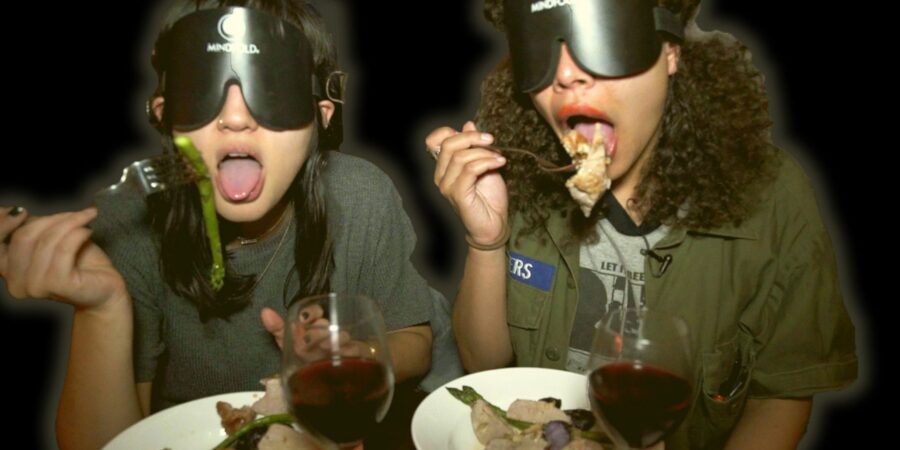
What is blindfold dining?
Blindfold dining, also known as blind dining or dark dining, is a unique dining experience where guests eat their meals in complete darkness or with blindfolds on. The concept behind blindfold dining is to remove the sense of sight, forcing diners to rely solely on their other senses, such as taste, touch, smell, and hearing, to fully experience the meal.
The idea was originally developed as a way to simulate the experience of being blind, promoting empathy and understanding for individuals with visual impairments. However, it has also become a popular and intriguing gastronomic trend, offering a novel way to explore and appreciate food in a completely different manner.
Blindfold dining experiences are typically offered in specialized restaurants or as pop-up events, often with specially trained staff to guide and assist guests throughout the meal. Diners are usually informed about the general type of cuisine or dishes they will be served before the meal, but the specific details of each course remain a surprise until they taste it.
By removing the visual aspect of eating, blindfold dining aims to heighten the diners’ other senses, making Flavors, textures, and aromas more pronounced and memorable. It can be a fun and enlightening experience, challenging preconceptions about food and enhancing one’s appreciation for the culinary arts.
Why do people enjoy blindfold dining?
People enjoy blindfold dining for several reasons, as it offers a unique and memorable experience that engages their senses and challenges their perceptions of food and dining. Here are some reasons why blindfold dining can be appealing:
- Heightened sensory experience: By removing the sense of sight, blindfold dining allows diners to focus more intensely on their other senses, such as taste, smell, touch, and hearing. This heightened sensory experience can make Flavors and aromas more pronounced, leading to a more immersive and enjoyable dining experience.
- Novelty and intrigue: Blindfold dining is not a typical way to enjoy a meal, and the novelty of the experience can be intriguing and exciting for many people. It offers a break from routine dining and allows guests to step out of their comfort zones.
- Enhanced appreciation for food: When people can’t rely on their sight to judge the appearance of a dish, they become more open-minded about Flavors and textures. It can lead to a deeper appreciation for the ingredients and the chef’s skill in creating a dish that tantalizes the other senses.
- Social interaction: Blindfold dining is often a group experience, and sharing this unique adventure with friends or family can create a sense of camaraderie and stimulate conversation and interaction among guests.
- Empathy and understanding: Blindfold dining can also foster empathy and understanding for individuals with visual impairments. By temporarily experiencing the world as a blind person does, diners may gain insight into the challenges faced by visually impaired individuals and develop greater sensitivity towards their needs.
- Mindful eating: Blindfold dining encourages mindful eating, as diners must focus on each bite, texture, and flavour without the usual distractions. This mindfulness can lead to a more mindful approach to food and eating even beyond the blindfold dining experience.
- Surprise and anticipation: Not knowing what dish will be served next can create an element of surprise and anticipation, adding an element of excitement and adventure to the meal.
- Unbiased judgment: Blindfold dining removes any biases related to the presentation of the food, such as its visual appeal or the reputation of the chef or restaurant. Diners can give a more unbiased judgment of the taste and quality of the dishes.
Overall, blindfold dining offers a multi-sensory experience that can be both fun and thought-provoking, appealing to those seeking a new way to explore food and connect with their senses.
How does dining in the dark differ from dining with a blindfold on?
Dining in the dark and dining with a blindfold on are both experiences that involve eating without the sense of sight, but they differ in some key aspects:
Environment:
Dining in the dark: In a dining in the dark experience, the entire dining room is pitch-black. Guests are guided to their tables by staff who are familiar with the layout and wear night-vision goggles or have adapted to the darkness. Throughout the meal, the environment remains completely devoid of light.
Dining with a blindfold: Dining with a blindfold on usually takes place in a standard dining room with regular lighting. Each diner wears a blindfold that effectively covers their eyes, simulating blindness, but the rest of the room remains visible.
Immersion:
Dining in the dark: Eating in complete darkness allows for a more immersive experience, as there are no visual distractions whatsoever. The absence of any light intensifies the focus on the other senses.
Dining with a blindfold: Although the blindfold partially restricts sight, some visual cues and lighting may still be perceived, albeit in a diminished and blurred form. This can slightly reduce the intensity of the sensory experience compared to dining in the dark.
Adaptation:
Dining in the dark: In complete darkness, diners have no choice but to adapt quickly to relying on their other senses to navigate the dining experience. It can take a few moments to adjust to the darkness fully.
Dining with a blindfold: Diners may take some time to adjust to the blindfold, but they are still aware of the presence of light and their general surroundings. The adaptation process may be less intense compared to dining in complete darkness.
Logistics and safety:
Dining in the dark: Running a dining in the dark experience requires careful planning to ensure the safety of both guests and staff in a pitch-black environment. It often involves trained staff members who are familiar with navigating the dark dining area.
Dining with a blindfold: Dining with a blindfold on can be more easily organized since it takes place in a standard dining room with existing lighting. Guests can be instructed to put on their blindfolds once they are seated.
Both experiences aim to heighten diners’ other senses and encourage them to savour their meals in a different way. The choice between dining in the dark and dining with a blindfold on may depend on the level of intensity and immersion one seeks in the sensory dining experience.
Blindfold Tasting
Blindfold tasting is a specific activity or exercise within the realm of wine tasting, food tasting, or sensory evaluation. It involves sampling various foods or beverages while blindfolded to eliminate the influence of visual cues on the tasting experience. The participants wear blindfolds or use blindfolding masks to conceal their sense of sight while they taste and evaluate the items.
Key features of blindfold tasting
Focused on evaluating specific foods or beverages.
Typically part of a tasting session or sensory evaluation workshop.
Allows participants to concentrate solely on taste, smell, and texture without being influenced by appearance.
Often used in wine tasting to assess wines objectively and prevent bias based on color or label.
In summary, blindfold dining is a complete dining experience conducted in complete darkness or with blindfolds on, aiming to engage multiple senses throughout the meal. On the other hand, blindfold tasting is a specific activity within food or wine tasting, where participants evaluate items while blindfolded to eliminate the influence of visual perception. Both experiences provide unique ways to explore and appreciate food and beverages in a different and more focused manner.
Explore Blindfold experiences and Taste and Smell experiences on Emotions Market, including Food tastings and Smell tastings.

Leave a Reply