
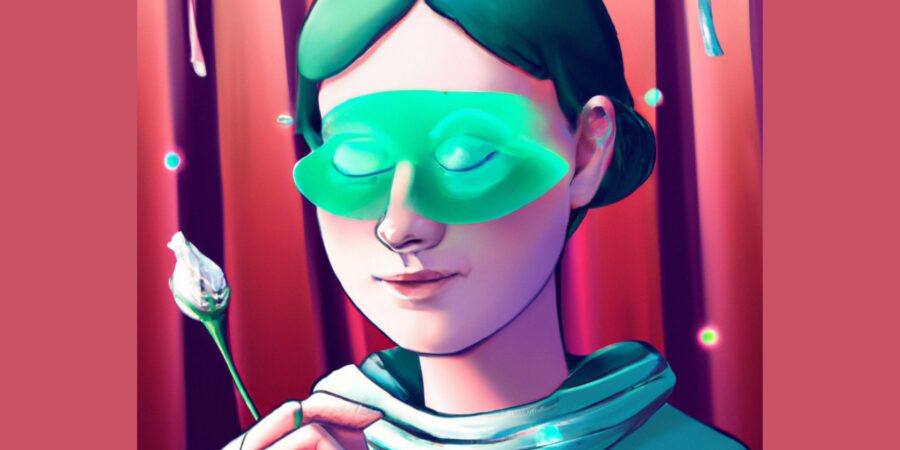
An olfactory blindfold experience is a sensory activity in which participants are blindfolded to enhance their focus on and appreciation of their sense of smell. The blindfold serves to eliminate visual distractions, allowing participants to concentrate more fully on the aromas and scents presented to them. This type of experience can be designed to be both enjoyable and educational, engaging participants’ olfactory senses in unique and immersive ways.
During an olfactory blindfold experience, participants might be exposed to a variety of scents, such as essential oils, natural aromas, perfumes, herbs, spices, or even food items. The goal is to heighten their awareness of the subtleties and nuances in different scents and to encourage them to explore the emotional and memory associations that specific smells can evoke. Olfactory blindfold experiences can be conducted in various settings, such as workshops, events, team-building activities, wellness retreats, or even personal relaxation sessions. They can range from simple activities like blindfolded smell tests to more elaborate scenarios that involve storytelling, creativity, and multi-sensory engagement.
A blindfold enhances an olfactory experience by eliminating visual distractions and focusing the participant’s attention solely on their sense of smell. When a person is blindfolded, their brain dedicates more resources to processing smells, which can lead to a heightened perception of aromas and a more immersive sensory experience. Here’s how a blindfold contributes to an olfactory experience:
- Eliminates Visual Distractions: When participants are blindfolded, they cannot rely on their sense of sight to interpret their surroundings. This absence of visual input allows them to direct their attention exclusively to the scents presented to them.
- Heightens Olfactory Focus: With vision restricted, participants are more likely to tune into their sense of smell. This heightened focus on smell can lead to a greater sensitivity to different aromas and a deeper exploration of the nuances within each scent.
- Enhances Sensory Perception: Blindfolding encourages participants to engage with their senses in a more holistic way. When one sensory input (sight) is removed, the brain compensates by amplifying the perception of other senses, such as smell.
- Promotes Mindfulness and Immersion: Removing visual distractions helps participants become more present and immersed in the experience. They become attuned to the scents around them, often leading to a more mindful and contemplative state.
- Amplifies Emotional and Memory Associations: Smells are closely linked to emotions and memories. Blindfolding can intensify the emotional impact of specific scents, making it easier for participants to connect smells with personal memories or feelings.
- Encourages Exploration and Discovery: Without visual cues, participants are more likely to explore scents thoroughly, focusing on different elements of each aroma and discovering new aspects they might not have noticed otherwise.
- Stimulates Creativity: Blindfolding can stimulate creativity by prompting participants to imagine and associate scents with different experiences, stories, or concepts.
- Enhances Group Dynamics: In group settings, blindfolding can foster a sense of unity and shared experience, as participants rely on their remaining senses and communicate more effectively to navigate the sensory activity together.
Overall, blindfolding is a strategic technique to deepen and enrich an olfactory experience, allowing participants to fully engage with and appreciate the intricate world of scents. It can be especially effective in creating a memorable and immersive sensory journey.
36 Olfactory blindfold experiences
- Perfume Workshops: Some places offer perfume workshops where participants can create their own custom scents. In some cases, participants might wear blindfolds to enhance their sense of smell and focus solely on the different fragrances they’re working with.
- Sensory Dining: Some restaurants or dining experiences focus on sensory immersion, where blindfolds are used to heighten the other senses, including smell and taste. This can be a unique way to appreciate food and drink.
- Scent-Based Games or Challenges: In some team-building or sensory awareness activities, participants might be blindfolded and then presented with various scents to identify or associate with certain objects or memories.
- Blindfolded Wine or Whiskey Tasting: Similar to sensory dining, some wine or whiskey tasting experiences might involve blindfolding participants to focus solely on the aroma and taste of the beverage.
- Mindfulness and Meditation: Some meditation practices involve focusing on the breath and senses, including smell. Blindfolds could be used to eliminate visual distractions and enhance the focus on scent.
- Educational Workshops: Schools or organizations might offer workshops that aim to educate participants about the sense of smell. Blindfolds could be used as a tool to heighten participants’ attention to their olfactory senses.
- Aromatherapy Discovery: Participants wear blindfolds and are guided through a journey of different aromatic scents used in aromatherapy. The goal is to connect with each scent’s emotional and relaxation effects.
- Nature Scents Exploration: In a natural outdoor setting, participants are blindfolded and led to various spots where they can experience the scents of different plants, flowers, and elements in the environment.
- Culinary Adventure: Blindfolded participants are presented with a series of unique and exotic food aromas. They have to guess the ingredients or dishes solely based on their sense of smell.
- Scented Art Creation: Participants are blindfolded and provided with various scented materials like paints, markers, and clay. They create artwork while relying on their sense of smell to guide their choices.
- Scent Memory Game: Blindfolded participants are exposed to a variety of scents and then challenged to identify and match them with corresponding scented objects without using their sight.
- Fragrance Storytelling: Participants wear blindfolds and are presented with different scents. They create short stories or descriptions based on the emotions and memories evoked by each scent.
- Blindfolded Garden Walk: A guided tour through a fragrant garden, where participants can immerse themselves in the scents of blooming flowers, herbs, and other natural elements.
- Perfume Composition Challenge: Participants, blindfolded, are given a selection of individual perfume notes. They have to mix and match the notes to create their own unique fragrance.
- Aromatic Meditation Retreat: Blindfolded participants engage in a guided meditation session that focuses on enhancing their awareness of different scents and their effects on mindfulness.
- Olfactory Guessing Game: Participants take turns blindfolded, while someone else presents them with various scents. They have to guess what each scent is without using their sight, relying solely on their sense of smell.
- Scented Texture Exploration: Blindfolded participants touch different textured objects while simultaneously smelling corresponding scents, enhancing the multisensory experience.
- Scented Puzzle Challenge: Participants solve a puzzle blindfolded, where each puzzle piece emits a unique scent. As they connect the pieces, they also piece together the scent-based clues.
- Blindfolded Perfume Guessing Game: Participants are blindfolded and given a series of scented strips infused with different perfumes. They guess the brand or type of perfume solely based on the scent.
- Candle Making Workshop: Blindfolded participants choose from a variety of scented oils to create their own candles. They rely on their sense of smell to craft their unique aromatic blends.
- Olfactory Adventure Walk: Participants are blindfolded and guided through an indoor or outdoor environment with carefully placed scents that tell a narrative or evoke specific atmospheres.
- Scented Yoga or Tai Chi: Blindfolded participants engage in a yoga or Tai Chi session, focusing on breath and movement, while also connecting with specific scents that enhance relaxation and presence.
- Scented Journaling: Participants wear blindfolds while smelling different scents. They then use these scents to inspire journal entries, creative writing, or poetry.
- Blindfolded Coffee or Tea Tasting: Similar to wine or whiskey tasting, participants explore the world of coffee or tea blindfolded, focusing on the aroma and taste profiles of different brews.
- Historical Scent Experience: Participants are blindfolded and presented with scents that were commonly used in different historical periods. They engage in discussions about the historical contexts of these scents.
- Collaborative Scent Art: In pairs or small groups, blindfolded participants work together to create a collaborative art piece using scented materials. They must communicate and collaborate without sight.
- Scented Memory Lane: Participants are blindfolded and presented with scents that are associated with various nostalgic memories. They share stories or thoughts triggered by each scent.
- Sensory Science Experiment: Blindfolded participants engage in a series of science experiments involving scents. This could include identifying scents based on chemical reactions or exploring the science of smell.
- Blindfolded Spa Retreat: Participants experience a spa-like environment with blindfolds on, focusing on relaxing scents and textures as they receive massages, facials, and aromatherapy treatments.
- Scented Dance or Movement Class: Blindfolded participants engage in a dance or movement class, allowing the scents in the room to guide their movements and emotional expression.
- Scented Puzzle Hunt: Participants follow scent-based clues while blindfolded to solve a puzzle or find hidden objects, creating an interactive and challenging sensory adventure.
- Blindfolded Musical Journey: Participants listen to music that is paired with specific scents. The scents change as the music shifts, creating a synesthetic experience that stimulates multiple senses.
- Blindfolded Travel Experience: Participants explore different cultures through scents. They are blindfolded and presented with aromas associated with various regions or countries.
- Scented Meditation Maze: Blindfolded participants navigate through a maze or labyrinth, guided by different scents placed strategically along the path, enhancing the meditative experience.
- Blindfolded Perfumer’s Challenge: Participants wear blindfolds and are tasked with identifying and categorizing a range of raw fragrance materials used by perfumers.
- Story-Based Scent Adventure: Participants follow a guided story while blindfolded, experiencing scents that correspond to different parts of the narrative, creating an immersive sensory storytelling experience.
The purpose of using a blindfold in an olfactory experience is to create a heightened and more immersive engagement with the sense of smell. By covering the eyes and eliminating visual stimuli, the blindfold removes potential distractions, allowing participants to concentrate fully on the scents presented. This restriction of sight sharpens the focus on the olfactory sense, leading to a more profound and finely tuned experience of different aromas.
Blindfolding enhances sensory perception by eliminating the dominant influence of sight, thus directing attention to the subtleties and nuances of various scents. Without the visual component, participants are more likely to notice the intricate details of each smell, such as its composition, intensity, and underlying notes. Furthermore, the sense of smell is closely linked to memory and emotion. When blindfolded, participants often find that scents trigger vivid memories and emotions more intensely. The absence of visual cues directs the mind’s focus towards these associations, fostering a deeper connection to the scents being experienced.
The blindfold also encourages a heightened state of mindfulness and present-moment awareness. With the elimination of visual distractions, participants are prompted to engage their senses more deliberately, embracing the immediate sensory environment. This can lead to a profound sense of presence and relaxation, enhancing the overall experience. From an educational perspective, blindfolded olfactory experiences can improve participants’ ability to identify and differentiate between various scents. By relying solely on smell, participants become more attuned to the subtle differences between aromas, refining their sense of smell over time.
In essence, the blindfold serves as a tool to isolate the olfactory sense, creating a unique space where participants can fully immerse themselves in the world of scents. It heightens sensory engagement, triggers memories and emotions, encourages mindfulness, and enhances learning about the complexities of smell. This multisensory approach amplifies the impact of olfactory experiences, making them more memorable and meaningful. Explore smell testing, food creation, smell creations, and food tastings amongst the other sensory experiences on Emotions Market.

Leave a Reply