
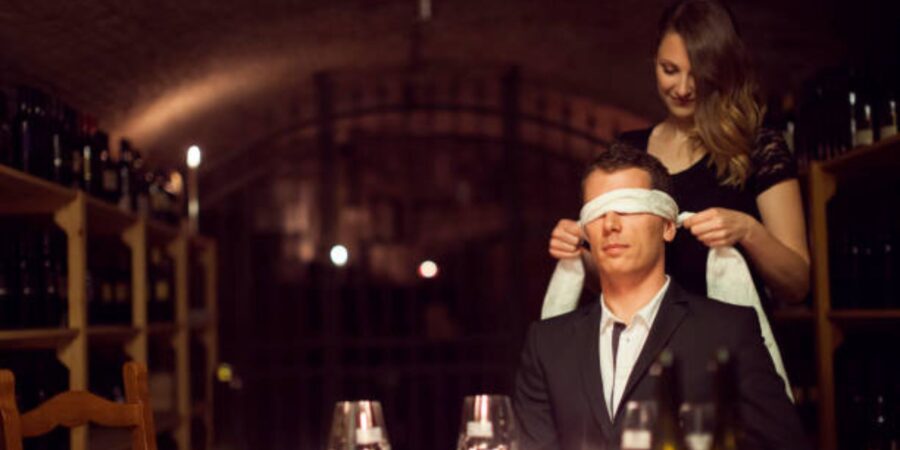
Blindfold tasting is a fascinating discipline that takes our awareness of taste to a whole new level in the world of gastronomy, where flavors dance on our palates like harmonic symphonies.
Blindfold tasting is a sensory experience that involves savoring food and beverages without the use of sight.
By removing the visual element, this one-of-a-kind experience sharpens our other senses, emphasizing flavors, smells, and sensations that would otherwise go unnoticed.
Join us as we explore the blindfold tasting and discover its amazing benefits.
Blindfold Tasting Benefits You Wish You’d Known Sooner
Let’s take a look at some terrific blindfold tasting advantages that are too good to be true:
1. Elimination Of Bias
Blindfold tasting or in other words, dining in the dark eliminates visual distractions and external influences, such as branding, packaging, and appearance.
This allows tasters to form judgments based purely on the sensory experience, preventing subconscious biases from affecting their evaluation.
2. Quality Assessment
Blindfold tasting enables tasters to assess a product’s quality without being swayed by its outward appearance by focusing exclusively on sensory attributes.
This is especially crucial when evaluating products that might not have a visually appealing presentation but excel in terms of taste and craftsmanship.
3. Enhanced Focus on Flavor
When sight is taken out of the equation, tasters become more attuned to the intricate interplay of flavors.
Nuances that visual aesthetics might have overshadowed are now brought to the forefront.
This heightened focus promotes a meticulous exploration of taste layers, enabling tasters to articulate complex flavor profiles.
4. Training & Education
Blindfold tasting is an immersive learning experience. Professionals, such as sommeliers and chefs, refine their skills through rigorous practice.
As tasters push their limits to discern flavors and aromas without visual cues, they become adept at articulating their sensory perceptions, enriching their ability to communicate with colleagues and customers.
Training and education are some of the biggest benefits of blindfold tasting that shouldn’t be overlooked at all.
5. Enhanced Sensory Awareness
Removing sight sharpens the remaining senses, making them more receptive. Tasters can detect minute nuances that would otherwise go unnoticed.
This sensory awareness enhances their enjoyment and deepens their understanding of the science behind taste and aroma interactions.
6. Fair Competition
Blindfold tasting develops an egalitarian platform for competition.
Participants are evaluated solely on the merits of their products, eliminating any advantage based on branding or prestige.
This encourages a diverse range of producers to participate, leading to a richer and more representative field of contenders.
Criticism of blindfold food tastings
Criticism of blindfold food tasting primarily revolves around its limitations and potential drawbacks. Detractors argue that while blindfolding eliminates visual biases, it also eliminates an essential aspect of the eating experience: the visual presentation. Presentation, including color, plating, and arrangement, can influence perceptions of taste and enjoyment, and blindfold tastings neglect this important element.
Additionally, blindfold tastings might not be practical for all types of foods. Some foods rely heavily on their visual appeal for appreciation, such as intricate desserts or visually complex dishes. Blindfolding could potentially hinder the full appreciation of such creations. Critics also point out that blindfold tastings oversimplify the dining experience. Eating is a multisensory activity, and relying solely on taste, smell, and texture overlooks the interplay of visual cues, ambiance, and even auditory aspects that contribute to overall enjoyment.
Furthermore, some individuals might find blindfold tastings uncomfortable or anxiety-inducing. Being deprived of sight while eating can trigger feelings of vulnerability or unease, potentially overshadowing the intended benefits.
Conclusion
Blindfold food tastings offer a range of benefits, enhancing the sensory experience and promoting objective evaluation. By eliminating visual cues and preconceptions, participants are encouraged to focus solely on taste, aroma, and texture. This cultivates a heightened sense of taste perception, enabling the discovery of subtleties that might otherwise go unnoticed. Additionally, blindfold tastings level the playing field, making it ideal for assessing foods in competitions where appearance might bias judgments. These tastings also foster a deeper connection with the culinary experience, as participants rely solely on their senses to unravel the complexities of flavor. This approach is particularly useful for training aspiring chefs, refining palates, and developing a more nuanced understanding of ingredients. Moreover, blindfold food tastings can create a sense of excitement and engagement, turning the evaluation into a captivating sensory adventure. Overall, blindfold food tastings empower participants to engage their senses fully, leading to fairer judgments, improved taste perception, and a more profound exploration of the gastronomic world.
Final Remarks
As we remove the blindfolds and end our sensory journey, it becomes clear that blindfold tasting is a remarkable entryway to a deeper relationship with the foods and drinks we meet on a regular basis.
Blindfold tasting cultivates humility by showing us that our senses may be deceptive as well as instructive.
So, whether you want to improve your palate, increase your appreciation for the culinary arts, or simply challenge your views, blindfold tasting offers an educational as well as enjoyable voyage.
Begin this journey by allowing your senses to guide you through a world of flavors that deserve to be appreciated to the fullest.

Leave a Reply