
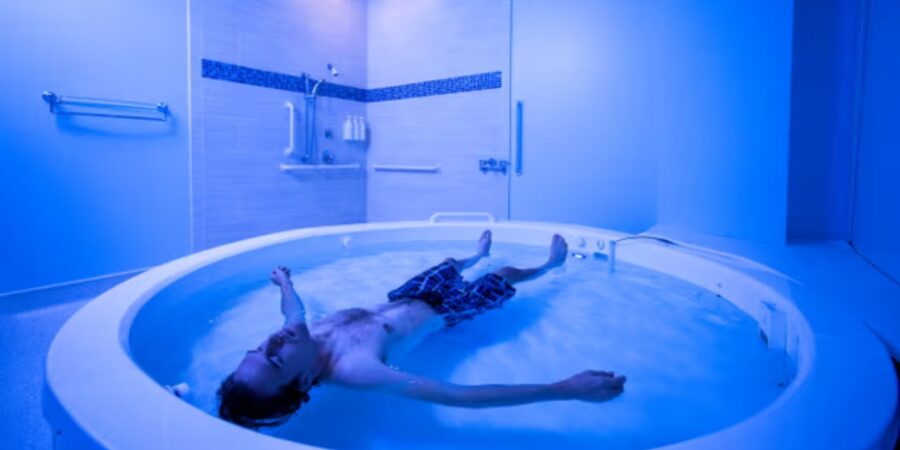
Float therapy, also known as sensory deprivation therapy or floatation therapy, is a relaxation technique and wellness practice that involves floating in a specially designed tank or pod filled with a dense solution of warm water and Epsom salt. The high salt concentration in the water makes it possible for individuals to effortlessly float on the surface, creating a sensation of weightlessness. Here’s how float therapy typically works:
- Float Tank/Pod: Float therapy takes place in a soundproof and lightproof tank or pod, often referred to as a sensory isolation tank or floatation tank. These tanks come in various designs, but they are generally designed to provide a tranquil and sensory-deprived environment.
- Saltwater Solution: The tank is filled with water, and a large amount of Epsom salt is dissolved in it. The high salt concentration increases the buoyancy of the water, allowing individuals to float effortlessly without sinking. The water is typically heated to skin temperature (around 93.5°F or 34°C), which helps create a sensation of weightlessness and minimizes the distinction between the body and water.
- Sensory Deprivation: Once inside the tank, individuals float in complete darkness and silence. The tank is designed to block out external sensory stimuli, including sound, light, and temperature fluctuations. This sensory deprivation creates a unique and deeply relaxing experience.
- Duration: Float sessions typically last for about 60 to 90 minutes, although some facilities offer shorter or longer sessions. The length of the session can be chosen based on individual preferences and needs.
The main goals and benefits of float therapy
- Relaxation: The sensory-deprived environment helps individuals relax deeply, both physically and mentally.
- Stress Reduction: Float therapy is known for its stress-reducing effects, as the absence of external stimuli allows the mind to calm down and promotes relaxation.
- Pain Relief: Floating can alleviate muscle tension, joint pain, and other physical discomforts due to the buoyant nature of the water and the relaxing environment.
- Enhanced Meditation and Mindfulness: Many people use floatation as a form of meditation or mindfulness practice, as the isolation tank can facilitate a state of deep introspection and mental clarity.
- Improved Sleep: Floating has been reported to improve sleep quality and help with insomnia.
- Creativity and Problem Solving: Some individuals use float therapy to enhance their creativity and problem-solving abilities, as the sensory isolation can encourage creative thinking.
- Emotional Well-being: Float therapy can be used for emotional healing, helping individuals process and release emotional tension or trauma.
It’s important to note that individual experiences with float therapy can vary, and it may not be suitable for everyone. People with certain medical conditions or concerns should consult with a healthcare professional before trying float therapy. Additionally, it’s recommended to visit a reputable and well-maintained float centre for a safe and enjoyable sensory deprivation experience.
Why do people enjoy floatation, as a way of sensory deprivation?
People enjoy flotation, also known as sensory deprivation or float therapy, for a variety of reasons, and the experience can be highly individualized. Here are some of the primary reasons why people find floatation enjoyable:
- Relaxation: One of the most common reasons people float is to experience deep relaxation. The buoyancy of the saltwater solution in a float tank allows individuals to effortlessly float on the surface, relieving pressure on muscles and joints. This physical relaxation can lead to mental relaxation and stress reduction.
- Stress Reduction: Floating in a sensory-deprivation tank can help reduce stress and anxiety. The absence of external stimuli allows the mind to quiet down, and many people find this state of sensory isolation calming and rejuvenating.
- Enhanced Meditation: Floating can be an excellent environment for meditation. The lack of sensory input helps individuals focus their thoughts and achieve a meditative state more easily. Some people use floatation tanks as a tool for mindfulness and self-discovery.
- Pain Relief: Floating can provide relief from various physical ailments, such as chronic pain, muscle tension, and joint stiffness. The weightlessness in the tank can alleviate pressure on the body and promote natural pain relief mechanisms.
- Creativity and Problem Solving: Some people use floatation as a way to enhance creativity and problem-solving abilities. The absence of distractions can lead to increased introspection and creative thinking.
- Improved Sleep: Floating can help individuals with sleep-related issues. The deep relaxation experienced during a float session can promote better sleep quality and help with insomnia.
- Enhanced Sensory Awareness: While floatation is often considered sensory deprivation, some people use it as a means of enhancing sensory awareness. By temporarily removing external stimuli, individuals may become more attuned to their internal sensations and thoughts.
- Mental Clarity: Floating can lead to a sense of mental clarity and improved mental focus. Many people report feeling more alert and clear-headed after a float session.
- Emotional Healing: Some individuals use floatation as a form of emotional therapy. The relaxed environment can be conducive to processing and releasing pent-up emotions or traumatic experiences.
- Personal Growth: Floatation can be a tool for personal growth and self-exploration. The introspective nature of the experience allows individuals to gain insights into themselves and their inner thoughts.
It’s important to note that while many people find floatation enjoyable and beneficial, individual experiences may vary. Some individuals may not enjoy the sensation of sensory deprivation or may not experience the same benefits as others. It’s advisable to consult with a healthcare professional before trying floatation therapy, especially if you have any medical conditions or concerns.
Future of float therapy
The future of float therapy holds several exciting possibilities and developments as this wellness practice continues to evolve. While it’s difficult to predict with certainty, here are some potential directions and trends that could shape the future of float therapy:
- Increased Popularity: Float therapy has been steadily growing in popularity, and this trend may continue as more people discover its benefits for relaxation, stress reduction, and overall well-being. As awareness spreads, more float centres may open in different regions.
- Technology Integration: Technology could play a role in enhancing the float therapy experience. Innovations might include improved filtration and sanitation systems, temperature and humidity control, and even augmented reality or virtual reality experiences within the tanks to enhance relaxation and meditation.
- Customized Experiences: Float centres may offer more customized experiences to cater to individual preferences. This could involve adjusting factors such as lighting, music, and aromatherapy within the tanks to create a personalized sensory environment.
- Research and Validation: Ongoing research into the therapeutic benefits of float therapy could lead to more widespread acceptance within the medical and wellness communities. Studies may explore its potential for managing various health conditions and improving mental health.
- Integration with Wellness Programs: Float therapy may become a more integral part of wellness programs and holistic healthcare approaches. It could be combined with other wellness practices like yoga, meditation, and massage therapy to offer comprehensive wellness packages.
- Accessibility: Efforts may be made to make float therapy more accessible to a broader range of people. This could include offering reduced-cost options, expanding to underserved areas, and making adjustments to accommodate individuals with disabilities.
- Home Floatation Systems: While float centres are currently the most common way to experience float therapy, there may be advancements in home floatation systems, making it possible for individuals to have their own float tanks or pods in their homes.
- Collaborations with Healthcare: Healthcare professionals may begin to incorporate float therapy into treatment plans for certain conditions, such as anxiety, chronic pain, and post-traumatic stress disorder (PTSD).
- Wellness Retreats: Float therapy could become a featured component of wellness retreats and destination spas, offering individuals a chance to combine floatation with other relaxation and self-care activities in beautiful natural settings.
- Eco-Friendly Practices: Float centres may place a greater emphasis on sustainability and eco-friendly practices, including the use of environmentally friendly materials, energy-efficient systems, and responsible salt disposal.
As with any wellness practice, the future of float therapy will depend on a combination of evolving research, changing consumer preferences, and technological advancements. It’s likely that we’ll continue to see innovations and developments that enhance the overall experience and therapeutic benefits of float therapy in the years to come.

Leave a Reply