
The comforting sensation of being hugged taps into both physiological and psychological factors that collectively contribute to the feeling of well-being, comfort, and happiness. Here’s why hugs feel so good:
- Release of Oxytocin: When you receive a hug, your body releases oxytocin, often referred to as the “cuddle hormone” or “love hormone.” Oxytocin is associated with feelings of happiness, relaxation, and trust. It helps to reduce stress and anxiety, promoting a sense of calm and contentment.
- Reduction of Cortisol: Hugging can lower levels of cortisol, the body’s stress hormone. By reducing cortisol, hugs can alleviate stress and calm the mind, making you feel more relaxed and at peace.
- Increased Sense of Belonging and Safety: Humans are social creatures, and physical contact is a fundamental aspect of our social system. Hugs can reinforce feelings of belonging and safety, reducing feelings of loneliness and isolation. This sense of connection is vital for our mental and emotional health.
- Stimulation of the Parasympathetic Nervous System: The gentle pressure of a hug can stimulate the parasympathetic nervous system, which helps the body relax and unwind. This can lead to a decrease in heart rate and blood pressure, contributing to a state of physical relaxation.
- Enhanced Mood: The physical contact of a hug can increase levels of serotonin and dopamine, neurotransmitters that are associated with happiness and reward. This can help improve mood and combat feelings of depression and anxiety.
- Pain Reduction: Physical touch, including hugging, can activate pressure receptors in the skin called Pacinian corpuscles, which send signals to the brain to reduce the perception of pain.
- Improved Immune Function: Some research suggests that the emotional support provided by hugs can boost the immune system. Feeling supported and connected can make you less susceptible to the kinds of stress that can lead to physical health problems.
- Enhanced Self-Esteem: From the moment we are born, physical touch plays a role in our development and emotional regulation. The association between touch and positive emotions that we build up from infancy can continue to affect our sense of self-worth and esteem throughout our lives.
The benefits of hugging are rooted in our biological need for touch and connection. This need for physical contact is not just a preference but a fundamental component of human health and well-being, making hugs a simple yet powerful way to improve our overall state of mind and health.
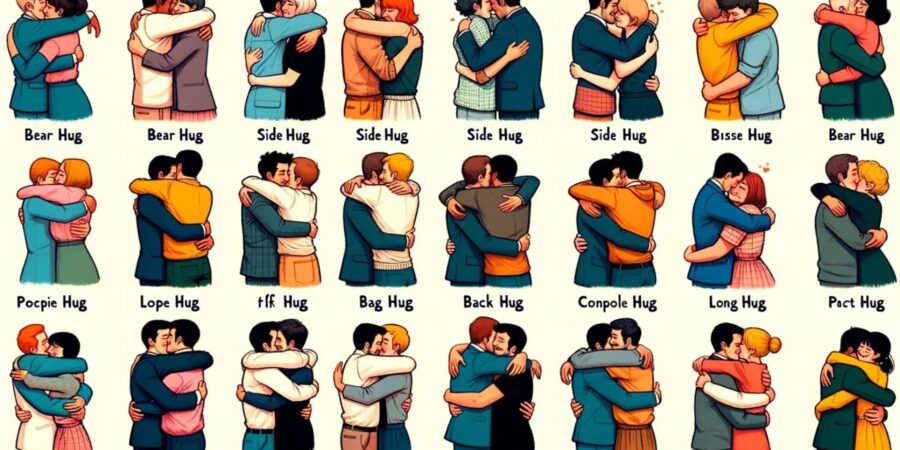
32 types of hugs
Hugs can convey a range of emotions and serve various purposes, from expressing love and support to offering comfort or even greeting someone. Here are ten different types of hugs and the contexts or emotions they might typically express:
- The Bear Hug: Characterized by a tight, powerful embrace, the bear hug is often a gesture of deep affection and warmth. It’s common among close friends and family members, symbolizing strong bonds and protection.
- The Side Hug: A more casual and less intimate form of hugging, the side hug involves wrapping an arm around another person’s shoulder or waist. It’s often used in friendly greetings or when taking photos to show camaraderie without full physical closeness.
- The Polite Hug: A brief and formal embrace with minimal body contact, the polite hug is common in professional or more formal settings, where it serves as a respectful way to greet or part ways without getting too personal.
- The Back Hug: Wrapping arms around someone from behind signifies trust and surprise, often seen among couples as a way to offer comfort or affection unexpectedly.
- The Group Hug: A collective embrace involving multiple people, the group hug is a way to share joy, success, or support among friends or teammates, emphasizing unity and shared emotions.
- The Heart-to-Heart Hug: This hug involves leaning in so that both huggers’ hearts are close to each other, often accompanied by a meaningful pat on the back. It’s a deeply emotional and comforting hug, suggesting a strong, heartfelt connection.
- The Long Hug: When a hug is held for an extended period, it transcends a quick greeting or goodbye, becoming a profound gesture of holding on to someone for support, comfort, or deep connection.
- The Lift-Off Hug: In this enthusiastic embrace, one person lifts the other off the ground, often spinning them around. It’s a playful hug that expresses excitement, happiness, and affection.
- The Squeeze Hug: A firm hug that is given with a quick, tight squeeze before letting go. It’s a way to express genuine fondness and excitement, often accompanied by a big smile.
- The Consoling Hug: Offered to comfort someone feeling sad, anxious, or upset, the consoling hug is gentle and lingering. It provides a sense of safety, empathy, and support, conveying the message that the person is not alone in their feelings.
- The A-Frame Hug: This is a somewhat awkward and distant hug where two people lean in to hug each other without their lower bodies touching. It’s often seen in formal settings or among acquaintances as a polite but not very intimate gesture.
- The Pat Hug: In this hug, one person pats the other’s back while embracing them. It can signify camaraderie or comfort, but sometimes it might also indicate a level of discomfort or a rushed, perfunctory gesture depending on the context and the relationship between the huggers.
- The One-Sided Hug: This occurs when one person is more enthusiastic about the hug than the other, who might remain more passive or less engaged. It can highlight differences in comfort levels with physical affection or the nature of the relationship.
- The Snuggle Hug: Often seen in romantic relationships, this type of hug involves two people holding each other closely in a relaxed manner, possibly while seated or lying down. It’s a form of cuddling that expresses warmth, comfort, and affection.
- The Ragdoll Hug: This happens when one person goes limp and lets the other person hug them without reciprocating. It might be playful or indicate reluctance or lack of enthusiasm for the hug.
- The Sandwich Hug: This group hug involves three or more people, with one person in the middle being hugged by the others from both sides. It’s a warm, comforting gesture often shared among close friends or family.
- The Puppy Pile Hug: A casual and affectionate group hug usually among friends or family members, where everyone piles on in a disorganized manner, symbolizing closeness and comfort.
- The Rocking Hug: This hug involves gently swaying side to side while embracing, often used to soothe or comfort someone or to express deep affection in a romantic relationship.
- The Dancer’s Hug: Typically seen in romantic or close relationships, this hug involves one person wrapping their arms around the other’s neck while the other wraps their arms around the waist, often with foreheads touching. It’s intimate and can be a prelude to a dance or a kiss.
- The One-Armed Hug: This casual hug involves wrapping just one arm around another person’s shoulder or waist. It can signal a friendly rapport but less intimacy, suitable for acquaintances or when greeting someone in a more informal setting.
- The Self-Hug: When someone wraps their arms around themselves, it can be a self-soothing action during moments of stress, anxiety, or when feeling cold. It can also indicate a longing for comfort or touch.
- The Linger Hug: This is a prolonged hug where neither person is quick to let go, indicating a deep connection and reluctance to part. It’s common in emotional farewells or when reuniting after a long separation.
- The Reverse Hug: This intimate hug involves one person hugging the other from behind, wrapping their arms around the waist or chest. It’s often seen in romantic relationships, conveying protection and closeness.
- The Jump Into Arms Hug: Typically seen in movies or romantic reunions, one person jumps into the arms of the other, who catches them and wraps them in an embrace. It’s a dramatic gesture of excitement and love.
- The No-Touch Hug: In some cultures or situations where physical touch is less common or appropriate, people might lean in close without actually touching, mimicking a hug’s motion. This gesture can signify respect and a desire to greet warmly without breaking social norms.
- The Hip Hug: This hug involves two people standing side-by-side and wrapping their arms around each other’s waist, pulling their hips together. It’s a casual yet affectionate way to pose for a photo or walk together.
- The Encouraging Hug: This type of hug is given as a form of encouragement, often with one person patting the other on the back while offering words of motivation. It’s common in sports or before significant events, like interviews or performances.
- The Swing and Sway Hug: Similar to the Dancer’s Hug but more relaxed, the two huggers hold each other and gently rock side to side. This soothing motion is comforting and often shared among close friends or family members.
- The Shoulder Lean Hug: In this less intimate hug, one person leans their shoulder against another, sometimes without full arm engagement. It’s a gesture of camaraderie or solidarity, often seen in supportive contexts.
- The Eye Contact Hug: Before or after a physical embrace, making prolonged eye contact adds depth to the interaction, conveying sincerity, affection, or understanding without words.
- The Double Hug: This occurs when two people hug each other with both arms around the neck and waist simultaneously, allowing for a close and multifaceted embrace. It’s a more enveloping form of affection.
- The Pet Hug: Extending the concept of hugging beyond human interactions, people often hug their pets to express love and care. While not a “hug” in the traditional sense, this interaction fosters a deep bond between humans and animals.
Hugs can embody a complex language of their own, with each type carrying distinct emotional tones and messages. They are a universal form of communication, transcending words to express everything from joy and love to sympathy and support. Each type of hug offers a unique way to communicate emotions non-verbally, ranging from love and joy to comfort and consolation, reflecting the complexity of human relationships and the deep-seated need for physical connection. Explore various hug and cuddle experiences on Emotions Market.

Leave a Reply