
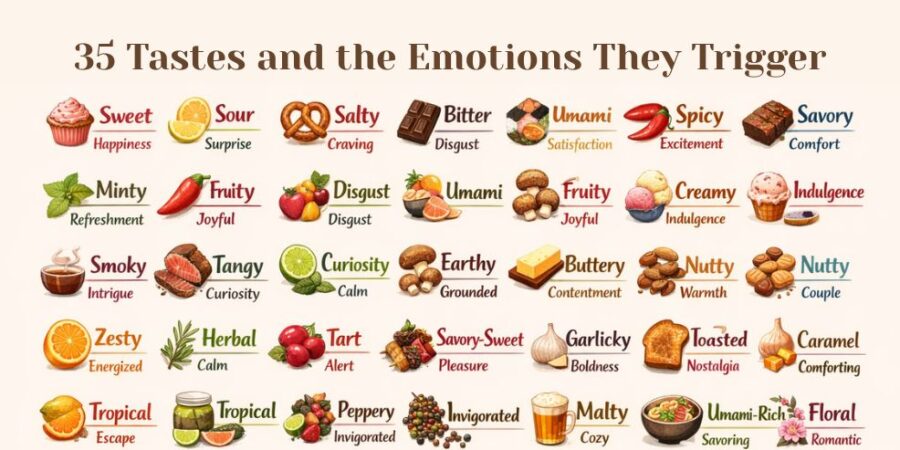
Taste is one of the most intimate ways we experience the world. Long before we find words for our emotions, our tongue is already translating life into feelings — comfort, curiosity, pleasure, surprise, even resistance. A single taste can unlock memories, shift our mood, or gently guide us toward or away from something. Unlike sight or sound, taste requires closeness. We must let it in, making it deeply personal and emotionally charged.
Every flavour carries more than chemistry. Sweetness often whispers safety, bitterness can invite reflection, sourness wakes us up, and savoury depth brings reassurance. Some tastes feel familiar and soothing, while others challenge us, stretching our emotional comfort zones. What we enjoy — and what we avoid — is shaped by biology, culture, memory, and personal experience, making taste a powerful mirror of our inner world.
In this article, we explore 35 different tastes and the emotions they commonly trigger, moving beyond the obvious into the surprising, unusual, and complex. From everyday flavours to unexpected sensory encounters, this guide invites you to notice how taste shapes your emotional landscape. Whether you seek comfort, stimulation, grounding, or adventure, understanding taste can help you engage more consciously with both food and feeling.
35 Tastes and the Emotions They Trigger
1. Sweet — Comfort and Nostalgia
Sweet tastes, like honey on toast or ripe strawberries, often bring feelings of warmth and comfort. They can trigger nostalgic memories — childhood desserts, family gatherings, celebrations — making you feel safe and content.
2. Salty — Satisfaction and Grounding
Salt enhances flavor and often evokes a sense of satisfaction and contentment. It can be grounding, reminding us of simple pleasures like pretzels and chips shared with friends.
3. Sour — Alertness and Surprise
Sour flavors, such as lemon or sour candies, can shock the senses and heighten alertness. They awaken the palate and often trigger excitement or playful surprise.
4. Bitter — Complexity and Respect
Bitterness, found in dark chocolate or black coffee, often carries a complexity that can be polarizing. When enjoyed, it is associated with sophistication, depth, and mindful appreciation.
5. Umami — Fulfillment and Satisfaction
Umami-rich foods like aged cheeses or broths offer a savory depth that feels deeply satisfying. This taste often brings a sense of fullness — physically and emotionally.
6. Spicy Heat — Excitement and Euphoria
The burn of chili or pepper adds intensity. It triggers endorphins, creating a rush that can feel addictive, exciting, and empowering.
7. Creamy — Comfort and Calm
Creamy tastes, whether from panna cotta or rich sauces, evoke feelings of comfort and calm. They are associated with indulgence and nurturing.
8. Tangy — Playful Energy
Tangy tastes like those in yogurt or green apples have a lively quality. They can spark a playful, energetic mood and often uplift the spirit.
9. Smoky — Mystery and Depth
Smoky notes in foods like grilled vegetables or smoked meats evoke rich, layered feelings. They can trigger introspection and a sense of warmth and depth.
10. Tart — Awakening and Clarity
Tart flavors have a sharpness that clears the palate and mind. They can create a sense of vibrancy and alertness, cutting through heavy emotions like fog.
11. Rich/Buttery — Indulgence and Pleasure
Buttery, rich tastes often feel luxurious. They can evoke pleasure, contentment, and a deep sense of indulgence that connects us to comfort and reward.
12. Fruity — Joyful and Bright
Fruity tastes carry light, sweet freshness. They are associated with happiness, light-heartedness, and an uplifted spirit.
13. Sour-Sweet Combination — Balanced Excitement
When sour and sweet dance together — like in citrus candies — the result is an exhilarating balance that can spark joy and playfulness.
14. Earthy — Grounded and Reflective
Earthy flavors, like beetroot or mushrooms, connect us to nature. They can elicit feelings of groundedness and introspection.
15. Herbal — Calm and Clarity
Herbal tastes, such as basil or mint, often feel cleansing. They can bring emotional clarity and soothing calm.
16. Metallic — Sharp and Alerting
A metallic taste can be jarring — making you feel alert or even uneasy. It often signals something out of the ordinary and demands attention.
17. Astringent — Purifying and Pensive
Astringent flavors like unripe persimmon or strong tea can dry the mouth and sharpen focus. Emotionally, they can feel purifying but also pensive.
18. Cool (Menthol) — Refreshing and Healing
Menthol-like coolness triggers a refreshing sensation. It’s calming and can reduce tension, creating a renewed sense of clarity.
19. Yeasty — Warmth and Homeliness
Yeasty flavors in fresh bread evoke home, hearth, and coziness. Emotionally, they are comforting and nurturing.
20. Caramelized — Warmth and Fulfillment
Caramelized tastes — like roasted onions or brûléed sugar — are rich and sweet with depth. They can evoke warmth, fullness, and emotional satisfaction.
21. Floral — Delicate and Uplifting
Floral notes like rose or lavender in foods can feel delicate and ethereal. They often evoke a light, uplifting, almost spiritual happiness.
22. Bitter-Sweet — Reflective and Poignant
Combining bitter and sweet — as in dark chocolate with honey — creates a reflective mood. It can stir emotions of bittersweet remembrance.
23. Tangy-Salty — Energetic and Bold
Tangy and salty together — like in salt-and-vinegar chips — stimulate alertness and bold energy. They often feel adventurous and spirited.
24. Pickled — Piquant and Curious
Pickled foods blend tang, salt, and often spice. They tend to pique curiosity and create a lively, inquisitive emotion.
25. Citrusy — Bright and Hopeful
Citrus tastes like orange, lime, or grapefruit trigger brightness and uplift. They evoke hope, freshness, and a zest for life.
26. Dessert Sweet — Reward and Pleasure
Dessert-level sweetness, like fudge or pastries, connects to reward, pleasure, and often celebration. They can trigger joy and a sense of indulgent delight.
27. Woody — Deep and Earthy Contemplation
Woody flavors, like juniper in gin or oak-aged wine notes, inspire contemplation and depth. They feel ancient, grounded, and thoughtful.
28. Savory Herbal — Comforting and Reassuring
Savory herbal blends, like rosemary with roasted vegetables, evoke reassurance and warmth. They feel like home-cooked comfort.
29. Rich Umami — Gratification and Security
Highly umami-rich meals can feel like a deep emotional hug. They create a sense of gratification and emotional security.
30. Exotic Spices — Adventure and Intrigue
Tastes like cardamom, saffron, or sumac activate the imagination. They often evoke curiosity, adventure, and cultural intrigue.
31. Burnt — Surprise and Complexity
Burnt or charred tastes don’t appeal to everyone. They often produce a complex blend of shock, surprise, and fascination — like discovering something unexpected in life.
32. Bitter-Herbal — Meditative and Stoic
Bitter herbs — like gentian or arugula — evoke strong emotive reactions. They can feel meditative, introspective, and even stoic.
33. Subtle Sweetness — Quiet Happiness
Soft sweetness — like ripe pears or vanilla bean — produces gentle delight. It’s a quiet, subtle pleasure that feels like a whisper of happiness.
34. Fermented Funk — Bold and Opinionated
Fermented, funky tastes like kimchi or natto can be divisive. They often elicit strong emotions — either love or aversion — and can awaken bold curiosity.
35. Unexpected Bitter-Sweet-Salty Blend — Emotional Complexity
Tastes that mix bitter, sweet, and salty (like salted dark chocolate or olive-stuffed caramel) trigger layered emotional responses — surprise, delight, confusion, intrigue — mirroring life’s complex emotional moments.
Conclusion: The Emotional Palette of Taste
Taste is far more than chemical reactions on the tongue. It is an emotional language — rich, complex, and deeply personal. From the joyful brightness of citrus to the reflective depth of bitter-sweet blends, every taste carries the capacity to shift mood, evoke memory, and connect us to ourselves and others.
Exploring tastes consciously invites us to explore our emotions with the same curiosity and compassion we bring to savoring a meal. Next time you experience a flavor — whether comforting, surprising, or bold — notice how it makes you feel. There’s an emotional story behind every taste. Explore our Taste And Smell Experiences.

Leave a Reply