
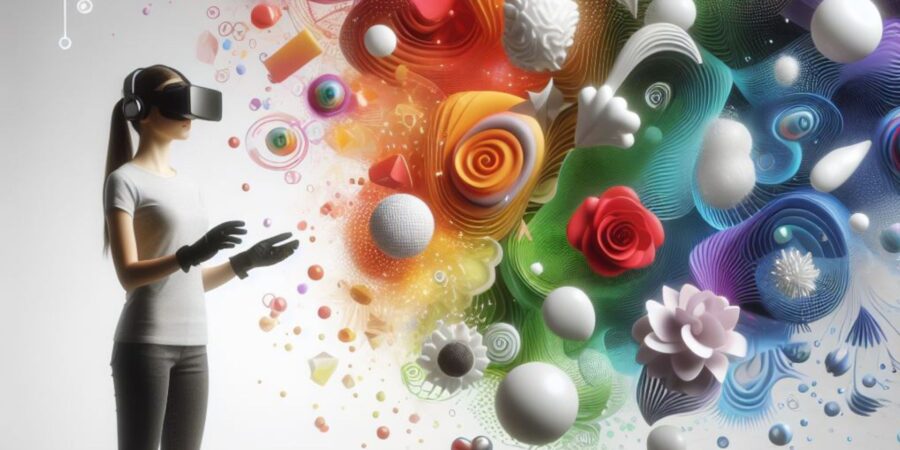
Augmented Reality (AR) refers to a technology that blends computer-generated information or virtual content with the user’s real-world environment in real-time. Unlike virtual reality (VR), which immerses users in a completely simulated environment, AR enhances the real world by overlaying digital information onto it. This integration can occur through various devices such as smartphones, tablets, AR glasses, or specialized AR headsets.
Key characteristics of augmented reality include:
- Real-time Interaction: AR provides real-time, interactive experiences by seamlessly integrating virtual elements into the user’s immediate surroundings.
- Combination of Real and Virtual Worlds: AR overlays digital content onto the physical world, allowing users to interact with both real and computer-generated elements simultaneously.
- Context Awareness: AR systems often utilize sensors and algorithms to understand and interpret the user’s environment, tailoring the virtual content to match the real-world context.
- Varied Applications: Augmented reality finds applications in diverse fields, including gaming, education, healthcare, manufacturing, navigation, and more. It enhances user experiences by providing additional information, visualizations, or interactive elements.
- Devices: AR can be experienced through various devices, ranging from handheld devices like smartphones and tablets to wearable devices like AR glasses and headsets.
Some examples of augmented reality applications include:
- Gaming: Pokemon Go is a popular example where virtual creatures are overlaid onto the real world using a smartphone’s camera.
- Navigation: AR can provide real-time navigation information, overlaying directions onto the user’s view of the real world.
- Education: AR can be used in educational settings to provide interactive learning experiences, such as overlaying 3D models onto textbooks.
- Healthcare: Surgeons may use AR to visualize medical images during surgeries, or AR can assist in training medical professionals.
- As technology continues to advance, augmented reality is likely to play an increasingly significant role in various industries, transforming how people interact with and perceive the world around them.
Augmented Reality and Emotions
Augmented reality (AR) experiences have the potential to significantly impact emotions by enhancing and influencing the way users perceive and interact with the world around them. Here are several ways in which AR can affect emotions:
- Enhanced Engagement: AR can create immersive and engaging experiences that capture users’ attention. By blending virtual elements seamlessly with the real world, AR can make interactions more interesting and entertaining, leading to positive emotions like excitement and curiosity.
- Personalization: augmented reality can tailor experiences based on user preferences and context. This personalization can create a sense of connection and relevance, fostering positive emotions as users feel more understood and catered to.
- Empathy and Understanding: AR applications in fields like healthcare and education can provide users with a deeper understanding of complex concepts. For instance, medical AR can visualize internal structures, enhancing empathy and understanding. This emotional connection can lead to increased engagement and a sense of accomplishment.
- Gamification: Many augmented reality applications, especially in gaming, use elements of gamification to enhance user experience. By incorporating game-like features such as rewards, challenges, and achievements, AR can evoke a range of emotions from joy and excitement to a sense of accomplishment and satisfaction.
- Social Interaction: AR can facilitate new forms of social interaction by allowing users to share augmented experiences. Shared AR experiences can strengthen social bonds, leading to positive emotions like joy, connection, and a sense of community.
- Therapeutic Applications: In certain therapeutic contexts, AR is being explored for its potential to assist in treating emotional disorders or phobias. For example, AR simulations can create controlled environments for exposure therapy, helping individuals confront and overcome fears in a controlled and supportive manner.
- Memorable Experiences: AR can create memorable and unique experiences that leave a lasting impression. Whether it’s through interactive storytelling, virtual art installations, or AR-enhanced events, these experiences can evoke emotions such as nostalgia, awe, or inspiration.
- Cultural and Educational Impact: AR can be used to bring history, culture, and education to life. By overlaying historical information or cultural artifacts onto the real world, AR can evoke emotions of appreciation, wonder, and a deeper connection to the subject matter.
It’s important to note that the emotional impact of augmented reality experiences can vary based on the design, context, and individual user preferences. When implemented thoughtfully, AR has the potential to evoke positive emotions, enhance user engagement, and create memorable and meaningful interactions. Conversely, poorly designed or inappropriate AR experiences may lead to negative emotions or discomfort.
Augmented Reality and Senses
Augmented reality (AR) experiences can significantly impact human senses by enhancing or altering the way individuals perceive the world. Here are ways in which AR affects different senses:
Visual Perception:
Enhancement: AR overlays digital information onto the real world, enriching the visual experience. It can add graphics, text, 3D models, or animations to the user’s field of view, enhancing their perception and understanding of the environment.
Contextual Information: AR can provide contextual visual information, such as real-time data overlays or annotations, enriching the user’s understanding of the surroundings.
Auditory Perception:
Spatial Audio: AR can incorporate spatial audio to provide a more immersive experience. Sounds can be positioned in 3D space, enhancing the perception of distance and direction.
Audio Cues: AR applications can use audio cues to guide users or provide feedback, contributing to a more interactive and engaging experience.
Tactile and Haptic Feedback:
Haptic Devices: Some AR applications integrate haptic feedback devices, such as vibration or force feedback, to simulate a sense of touch. This can enhance the sense of immersion and interaction in AR experiences.
Tactile Interactions: augmented reality devices with touch-sensitive surfaces or gesture recognition can enable tactile interactions, allowing users to physically engage with virtual elements.
Gustatory and Olfactory Senses:
Limited Integration: While AR primarily focuses on visual and auditory experiences, there have been some experimental applications exploring the integration of smell and taste through connected devices. However, widespread integration of gustatory and olfactory elements is currently limited.
Kinesthetic Sense:
Spatial Awareness: AR can contribute to users’ kinesthetic sense by providing spatial information. For example, AR navigation systems can guide users through physical spaces, enhancing their awareness of their surroundings.
Temporal Perception:
Time-Based Interaction: AR experiences can influence temporal perception by synchronizing virtual elements with real-world events. For instance, timed AR annotations or animations can create a sense of rhythm or coordination.
Emotional Response:
Affective Computing: AR can leverage sensors to interpret facial expressions, gestures, and other physiological signals, contributing to emotionally aware applications. This capability allows AR to adapt and respond to users’ emotional states, enhancing the overall user experience.
Multisensory Integration
Holistic Experience: When augmented reality effectively combines visual, auditory, and tactile elements, it can create a multisensory experience. This integration contributes to a more immersive and engaging interaction with the augmented environment.
As technology advances, researchers and developers continue to explore ways to further enhance sensory experiences in AR. The goal is to create seamless and natural interactions that leverage multiple senses to provide users with more immersive and compelling augmented reality experiences.
The future of AR for senses and emotions
In the future, augmented reality (AR) is expected to have an even more profound impact on human senses and emotions as technology continues to advance. Here are some potential ways in which AR may evolve to influence our sensory experiences and emotional responses:
Advanced Visual Experiences:
High-Resolution Displays: Future AR devices may feature higher resolution displays, providing more realistic and detailed virtual overlays, contributing to a heightened visual experience.
Wider Field of View: Advances in optics and display technologies could lead to AR devices with a wider field of view, making digital content seamlessly blend with the real world over a broader area.
Enhanced Auditory Experiences:
3D Audio: Future AR systems may incorporate more sophisticated 3D audio technologies, creating a more immersive and spatially accurate auditory environment.
Personalized Soundscapes: augmented reality applications could tailor audio experiences based on individual preferences, creating personalized soundscapes for users.
Tactile and Haptic Feedback:
Advanced Haptic Devices: Developments in haptic feedback technology may result in more sophisticated devices that simulate a broader range of sensations, providing users with a richer tactile experience.
Haptic Gloves and Suits: Wearable haptic devices like gloves or suits could enable users to feel and interact with virtual objects in a more detailed and nuanced manner.
Gustatory and Olfactory Integration:
Connected Devices: While challenging, researchers may explore ways to integrate gustatory and olfactory experiences into AR through connected devices, allowing users to engage more senses in their augmented reality interactions.
Emotion Sensing and Response:
Advanced Affective Computing: AR systems could become more adept at interpreting and responding to users’ emotional states through advanced affective computing. This might involve real-time analysis of facial expressions, gestures, and physiological signals.
Adaptive Content: AR applications may dynamically adjust content based on users’ emotional responses, creating personalized and emotionally resonant experiences.
Multisensory Integration:
Seamless Integration: Future augmented reality systems might offer even more seamless integration of visual, auditory, tactile, and potentially gustatory/olfactory elements, creating holistic and immersive multisensory experiences.
Interconnected Devices: AR ecosystems could be interconnected with other smart devices in the environment, enabling a coordinated multisensory experience that extends beyond individual AR devices.
Neurofeedback and Brain-Computer Interfaces:
Brain-Computer Interfaces (BCIs): Integration of BCIs with augmented reality devices could allow for direct communication between the brain and the augmented environment, potentially enabling new ways to perceive and interact with virtual content.
Neurofeedback for Emotional Regulation: AR systems may incorporate neurofeedback mechanisms to help users regulate and enhance their emotional states during interactions.
AI-driven Personalization:
AI-powered Content Creation: Advanced AI algorithms may generate highly personalized and context-aware AR content, tailoring experiences to individual preferences, interests, and emotional states.
It’s important to note that ethical considerations, privacy concerns, and user acceptance will play crucial roles in determining the extent to which these advancements are adopted and integrated into future AR experiences. The evolution of augmented reality will likely involve a combination of technological innovation, user feedback, and ongoing research in the fields of human-computer interaction and sensory augmentation. Explore Augmented reality (AR) experiences on Emotions Market.

Leave a Reply