
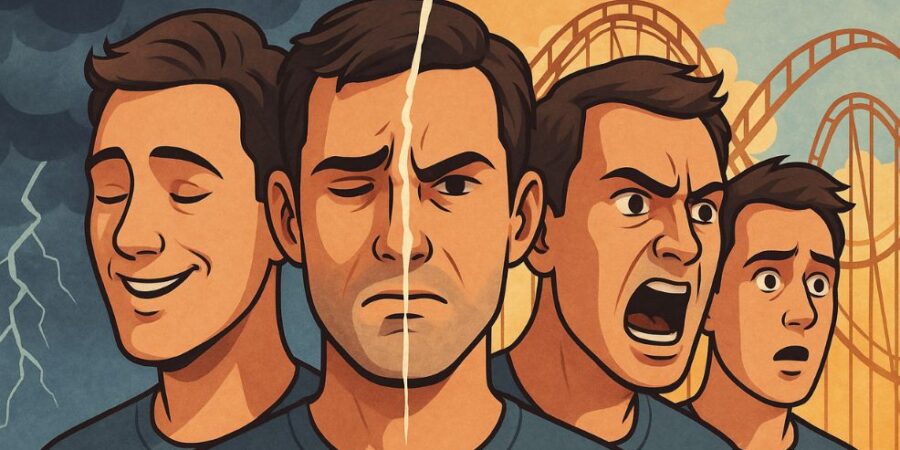
Emotional Whiplash – the term alone might sound a bit daunting, like something to avoid. It refers to those abrupt, intense swings in emotion that leave you feeling as if you were just on an emotional rollercoaster. One moment you’re on top of the world, the next moment you’re down in the dumps (or vice versa), all in a flash. If you’ve ever laughed through tears, felt shock turn into relief, or gone from anxious anticipation to pure joy within moments, you’ve felt the jolt of emotional whiplash. But is this rapid change in feelings necessarily a bad thing? Not at all! In fact, emotional whiplash experiences – when approached purposefully and safely – can actually enrich our lives. They can help us break out of emotional ruts, learn about ourselves, and even improve our overall emotional well-being.
In this in-depth exploration, we’ll dive into what emotional whiplash really means. We’ll look at different types of emotional whiplash, from the everyday mood swings to thrilling deliberate experiences that take you on a whirlwind of feelings. We’ll also discuss the benefits you can gain from these wild emotional rides and the potential drawbacks to be aware of. Most importantly, we’ll see how these emotional ups and downs can ultimately affect your emotions in a positive way and improve your emotional state. Finally, for the experience seekers out there, we’ll highlight how you can embrace emotional whiplash in a controlled, constructive manner – including some unique emotional whiplash experiences (from the Emotions Market listings) that can help make life better. So fasten your seatbelt – it’s time to take a ride through the peaks and valleys of our feelings!
What Is Emotional Whiplash?
Just as physical whiplash is a sudden jolt to your neck from a quick snap back and forth, emotional whiplash is a sudden jolt to your feelings. It happens when you experience a rapid shift from one strong emotion to another. Imagine getting amazing, exciting news and feeling elated – then moments later, something frustrating or sad happens that brings you crashing down. Or picture watching a film that has you laughing one minute and sobbing the next. That disorienting zigzag of emotions is emotional whiplash.
Emotional whiplash can occur in all areas of life. Sometimes it’s triggered by external events (like unexpected news, a dramatic surprise, or someone’s drastic change in behavior) and other times it might come from inside us (like quick mood changes or anxiety that flips our feelings). The key characteristic is the speed and intensity of the change. You’re not just gradually shifting moods; you’re slingshotted from one emotional state to another so quickly that it can leave you reeling.
Common phrases capture this feeling well: “rollercoaster of emotions,” “ups and downs,” “ping-ponging feelings,” etc. You might physically feel the effects too – heart pounding during a sudden scare, tears of relief after intense stress, butterflies in your stomach when surprised by joy. Emotional whiplash engages our mind and body in a swift transition.
It’s important to note that emotional whiplash itself isn’t a single emotion – it’s the experience of contrast. It’s what happens when joy turns into fear, or anxiety turns into excitement, or anger melts into laughter in a short span. These contrasts can be startling, but they also make us profoundly aware of our emotions. They remind us we’re alive and feeling the full spectrum of being human.
Different Types of Emotional Whiplash
Emotional whiplash comes in many forms and can arise from various situations. Here, we’ll elaborate on a few different types or scenarios in which emotional whiplash occurs. You may recognize some of these from your own life experiences:
1. Everyday Life Rollercoasters
In day-to-day life, small events can cause big emotional turnarounds. We’ve all had days where we wake up feeling great, then something goes wrong at work and suddenly we’re stressed or upset. Then by evening, perhaps something cheers us up again. These quick swings are a mild form of emotional whiplash most people experience regularly. For example:
- Good News/Bad News Swings: You get an unexpected compliment or achieve a small victory (boosting your mood), but an hour later you receive a disappointing email or hit awful traffic – and your mood plunges. That abrupt high-to-low is jarring.
- Stress to Relief Cycles: Think about when you’re frantically worried you lost your phone, searching everywhere in a panic. Then you find it and whoosh – a wave of relief washes over you. Your body goes from adrenaline-fueled anxiety to calm relief in seconds. It’s a whiplash, but it ends in a positive feeling.
- Minor Crises and Saves: Your project crashes at work or computer freezes (spiking frustration and dread), but then you manage to fix the issue or recover the file (cue huge relief and joy). Everyday ups and downs like these, though not extreme, are still whiplash moments.
These kinds of emotional whiplash are common and usually harmless, though they remind us how quickly feelings can change. They often resolve quickly too, with the low or high not lasting too long.
2. Relationship Whiplash
Relationships sometimes bring intense emotional whiplash, especially if the relationship is unstable or filled with dramatic shifts. Have you ever heard someone say “Being with this person is giving me emotional whiplash”? This usually refers to a partner, family member, or friend whose behavior is hot-and-cold:
- Hot and Cold Behavior: For instance, a romantic partner showers you with affection and love one day, and the next day is distant or arguing. You swing from feeling deeply loved and happy to anxious or heartbroken almost overnight. That contrast can be very painful and confusing.
- On-Off Relationships: Some couples break up and make up repeatedly. Each reconciliation brings hope and bliss, each breakup brings anger and sadness – a cycle of elation and devastation that can feel like an emotional centrifuge.
- Emotional Manipulation: In unhealthy dynamics (like narcissistic or toxic relationships), one person might intentionally cause whiplash – giving praise or gifts, then suddenly withdrawing or criticizing. This rollercoaster keeps the other person off-balance. (This is a drawback scenario – not a good kind of emotional whiplash, which we’ll address later.)
Relationship-based whiplash tends to be tough. The stakes are high because they involve people we care about. While such whiplash can teach us resilience and communication skills, if it’s frequent it may signal an unhealthy situation. (Emotional whiplash experiences are best when consensual and safe, not as a constant way of life inflicted by someone else.)
3. Life Event Whiplash
Sometimes life throws major events at us in rapid succession, causing wild emotional swings. You might go through a period where big positive and big negative events collide:
- Triumph to Tragedy (or Vice Versa): Perhaps you receive a fantastic job offer the same week a loved one falls ill. You’re elated one moment and fearful or sorrowful the next. Or after a period of hardship, something wonderful happens unexpectedly, swinging you from despair to hope.
- Unexpected Changes: Life can change on a dime – winning an award, then losing something important, or having a sudden breakthrough followed by a setback. These abrupt turns can leave you feeling mentally and emotionally “whiplashed” as you try to process it all.
- Post-High Crash: Even purely positive events can lead to whiplash after the fact. For example, after the high of a wedding day or a big performance, people often report feeling a “down” or emptiness in the days following. That sharp contrast between the excitement and the quiet aftermath is a form of emotional whiplash (sometimes called the “post-event crash”).
Life event whiplash is often unavoidable – life can be unpredictable. The emotional turbulence during these times can be intense, but working through such swings often leaves people wiser, more adaptable, and sometimes more appreciative of stability in the long run.
4. Entertainment & Media Whiplash
Have you ever watched a movie that had you crying one minute and laughing the next? Or a thriller that kept you terrified then gave you a heartwarming resolution? Storytellers sometimes engineer emotional whiplash intentionally, because experiencing a range of feelings can make a book, movie, or song very powerful and memorable:
- Movies and TV: Think of a film that is mostly light-hearted but suddenly hits you with an emotional gut-punch twist (or vice versa). That twist can make the journey more impactful. For example, an adventure might mix moments of despair and triumphant joy; a drama might put you through grief and then surprise you with hope.
- Books and Theater: Great stories take readers on an emotional journey, often with highs and lows. A novel might break your heart then mend it by the end. A play might have a scene of intense conflict followed by reconciliation and peace.
- Music: Even a single song can create emotional whiplash – starting soft and sad, building to a loud angry chorus, then ending in a soothing melody. The contrasts in tone evoke different emotions in quick succession.
These experiences are deliberately designed whiplash, and we often enjoy them. Why? Because they’re cathartic. They let us feel a lot in a short time, all within a safe frame (we know it’s just a story or performance). In a strange way, we seek these out for entertainment. That’s a hint that not all emotional whiplash is bad – when we choose to enter it, it can be thrilling and moving.
5. Intentional Emotional Whiplash Experiences
Beyond consuming media, people are increasingly seeking real-life experiences that give them a rollercoaster of emotions in a safe, controlled way. These might be immersive events, activities, or therapeutic sessions that intentionally create emotional contrast for personal growth or fun. For example:
- Haunted Attractions or Thrill Rides: A haunted house experience or a rollercoaster ride sets you up with fear and adrenaline, then often ends with laughter and relief once you’re safe. You knowingly sign up to be scared silly, because the after feeling (relief, exhilaration) is so good. That’s emotional whiplash as entertainment.
- Escape Rooms and Immersive Games: These can induce moments of suspense or frustration (when you’re stuck) and bursts of excitement (when you solve a clue or beat the clock). You might go from tense concentration to cheering in one hour.
- Therapeutic Workshops: Some workshops are designed to evoke strong emotions for release. For instance, a scream therapy session might have participants yell or vent (bringing out anger or pain) and then guide everyone into meditation or calm breathing. Another example is a structured emotional release retreat where you might cry freely during one exercise and dance joyfully in the next. This purposeful whiplash helps you release pent-up feelings and then fill up with positive ones.
- Multi-Sensory Experiences: At Emotions Market, many experiences are crafted to engage your senses and feelings deeply. Some creators design sessions where you might feel confusion then clarity, or discomfort then pleasure, all to tap into different emotions. The quick shifts heighten your self-awareness and can lead to “aha” moments emotionally.
Intentional emotional whiplash experiences are becoming popular because they allow people to live through a wide spectrum of emotions in a guided manner. You get the thrill or catharsis, but within a safe container set by the experience host. It’s like training for your feelings – you “exercise” different emotions and come out feeling like you’ve accomplished something profound (and often, had some fun in the process!).
Benefits of Emotional Whiplash
It’s understandable to assume that staying emotionally steady is ideal and that extreme ups and downs should be avoided. Constant turmoil is exhausting, yes – but occasional emotional whiplash, especially when purposefully embraced, can actually offer some great benefits. Here are some positive aspects and benefits of experiencing emotional whiplash:
- ✨ Heightened Emotional Awareness: When you’re jolted from one emotion to another, you become highly aware of those feelings. It’s like an emotional wake-up call. This can help you understand yourself better. For example, going from calm to fearful in a haunted maze might teach you exactly what triggers your fear response – and how relief feels in your body afterward. These insights build emotional intelligence.
- 🎢 Emotional Range & Resilience: Just as exercising different muscle groups makes you physically stronger, experiencing a range of emotions can make you emotionally more resilient. If you’ve gone from sadness to happiness and survived the swing, you learn that emotions are temporary and you can ride them out. Over time, this builds confidence that “I can handle whatever I feel.” You essentially stretch your capacity for feeling without breaking.
- 🔄 Catharsis and Release: Emotional whiplash often involves a release of pent-up emotion followed by a positive feeling. Think of the powerful relief after a cry or the tranquility after you’ve screamed out your anger in a safe setting. That sequence – tension then release – is one of the most healing aspects of whiplash experiences. They allow you to purge stress or bottled feelings. For instance, someone might do a rage room experience (smashing objects to vent anger) and emerge feeling lighter and calm. The benefit is getting emotions out rather than suppressing them.
- ⚡ Increased Joy and Appreciation: Strangely enough, going through a low can make the subsequent high feel even more glorious. Emotions are often felt in contrast. After you’ve been scared, safety feels blissful. After shedding tears, laughter feels more buoyant. So an emotional low can amplify the next positive emotion. This means planned emotional whiplash can actually give you bigger joy or relief than you’d get from a more steady experience. It’s like how a rollercoaster’s scary drop makes the next rise so exhilarating – if it were just a flat train ride, it wouldn’t be nearly as exciting.
- 💡 Learning and Growth: Intense emotional shifts often leave a strong imprint, which makes them memorable and sometimes perspective-changing. You might learn important lessons from these moments. For example, a rapid change from taking someone for granted to almost losing them (and then getting them back) can forever teach you to value that person. Or participating in an emotional whiplash workshop might reveal emotional strengths or vulnerabilities you didn’t know you had, sparking personal growth.
- 🔥 Breaking Emotional Numbness: Many people go through periods of feeling numb or stuck in a narrow emotional range (like just stress, or just boredom). A dose of emotional whiplash – a mix of fear, surprise, delight, etc. – can jolt you out of numbness. It’s a bit like jump-starting a car. Suddenly, you feel alive and human again with real emotions coursing through you. This can be incredibly invigorating if you’ve been in a rut.
- 🎭 Empathy and Perspective: Experiencing a swing of emotions can also increase empathy. When you yourself go from one extreme to another, you understand how complex feelings can be. This might help you empathize with others’ emotional changes or not judge someone for “mood swings” because you know how it feels. It also gives perspective that life has both highs and lows – and that’s normal and okay. Embracing that reality can actually make you calmer in the face of future emotional waves.
Overall, emotional whiplash experiences can be enriching. They remind us that we are capable of feeling so much. By consciously allowing ourselves these ups and downs (in moderate, healthy ways), we often come out the other side with greater happiness, relief, or insight than if we’d stayed on a straight, flat emotional road.
Potential Drawbacks and Challenges
While there are many benefits, it’s also important to acknowledge that emotional whiplash isn’t always positive. If it’s too intense or happens too frequently without your control, it can have downsides. Here are some potential drawbacks and challenges associated with emotional whiplash:
- 😰 Stress and Overwhelm: Rapid emotional swings are, in a word, intense. They can put your body and mind through the wringer. You might experience stress responses (racing heart, fatigue, tension headaches) from the rollercoaster. If emotional whiplash happens very often, it may leave you feeling drained or anxious because you’re constantly bracing for the next turn.
- 😕 Confusion and Lack of Control: Emotional whiplash can be confusing, especially when you don’t understand why your feelings flipped so fast. People might even question “Why am I feeling this way? What just happened?” The sudden changes can make you feel a bit out of control or unstable. If someone else (or life events) are causing it, you may feel powerless and bewildered.
- 😖 Emotional Exhaustion or Burnout: Just like how being on a physical rollercoaster repeatedly can exhaust your body, being on an emotional rollercoaster repeatedly can exhaust your mind. Emotional burnout is possible if one lives in constant highs and lows without rest. You might become irritable or numb as a defense, which is the body’s way of saying “I need a break from all these feelings.”
- ⚠️ Potential for Anxiety: If you come to expect that any good feeling will suddenly crash or any bad feeling will spike unexpectedly, it can create a background anxiety – waiting for the other shoe to drop. Some people might start to fear the next swing, which isn’t healthy if it prevents you from enjoying the present moment.
- ⚖️ Difficulty Regaining Balance: After a big swing, you often need time to recover equilibrium. Some people find it hard to settle back to normal after a huge high or low. For instance, after an emotionally whiplashing event, you might feel “off” for a while, as your mood recalibrates. This adjustment period can be uncomfortable.
- 🙅🏻 Unhealthy Whiplash Situations: In certain contexts, emotional whiplash is a red flag – for example, the relationship whiplash we discussed. Being jerked around emotionally by someone else’s inconsistency or manipulation can erode your self-esteem and mental health. That kind of chronic emotional whiplash is not beneficial and often requires setting boundaries or seeking help. (It’s quite different from choosing an occasional whiplash experience for personal growth or fun.)
- 🤢 Physical Side Effects: Emotions affect the body. Intense crying then laughing then crying can dehydrate you or leave you with a headache. A big adrenaline rush can leave you shaky or nauseated afterward (ever feel wobbly-kneed after a scare?). These physical effects are usually temporary, but they’re signals to not overdo it.
The good news is that many of these drawbacks are mitigated when you are in control of the whiplash – i.e., when you choose the experience and know it’s coming versus being blindsided. This is why intentional emotional whiplash (like a planned experience) can be enjoyable: you have some psychological preparation and usually a supportive environment. In contrast, uncontrolled emotional whiplash (like chaotic life drama) can be more harmful.
The key is moderation and recovery. Just as you wouldn’t ride a rollercoaster nonstop all day because you’d get sick, you also shouldn’t subject yourself to extreme emotional swings constantly. Occasional rides, with time to rest and reflect afterward, are where the benefits lie. Being mindful of how you feel and taking care of yourself (hydration, breathing, talking it out, etc.) after an intense emotional swing ensures you reap the positives without too much of the negatives.
How Emotional Whiplash Can Improve Your Emotional State
It sounds counterintuitive: How can something so turbulent actually improve your emotional state? Yet, when handled properly, emotional whiplash can lead to lasting positive changes in how you feel day-to-day and how you manage emotions. Here’s how:
- 🌈 Greater Emotional Range = Richer Emotional Life: If your emotional life were a color palette, whiplash experiences force you to use more colors in a short time. This tends to make your overall life experience feel richer and more vibrant. People who allow themselves to feel a broad range often report feeling more alive. You’re not stuck in grayscale; you’re seeing the full rainbow of feelings. This richness itself improves your baseline emotional state because you’re living more fully.
- 🔧 Better Emotional Regulation Skills: Going through quick changes can actually train you in emotional regulation. For instance, if you purposefully go from a state of high anger to calm (like in a guided session where you scream into a pillow and then do deep breathing), you practice the skill of down-regulating intense emotions. Or if you go from fear to peace, you learn how to soothe yourself after stress. Over time, these experiences teach your brain and body how to switch gears more smoothly. That means in everyday life, you might recover from upsets faster or know little tricks to lift your mood because you’ve “been there, done that” in a controlled way.
- 💆 Release Leads to Relief: Improving emotional state often means reducing negative feelings like stress, anger, or sadness that we carry. Emotional whiplash experiences often start with a negative or intense release and end with relief or comfort. For example, crying hard then being comforted leaves you lighter than before; venting rage then relaxing leaves you calmer than before. These experiences can flush out emotional toxins, so to speak, leading to an improved baseline mood after the session. It’s similar to how a storm can clear out the heavy air and leave a fresh calm.
- 😌 Increased Confidence and Emotional Safety: Oddly, voluntarily riding an emotional rollercoaster can make you more confident in handling emotions overall. You prove to yourself that “I can go through these highs and lows and come out okay.” This self-assurance improves your emotional state because you’re less afraid of your own feelings. You realize emotions, even intense ones, are manageable and temporary. That sense of emotional safety – trusting that “it’s okay for me to feel” – can reduce anxiety and avoidance in life. You become more open to positive emotions too, because you’re not afraid of the potential crash as much.
- 🎇 Joy in Contrasts: Experiencing emotional contrasts can actually create unique forms of joy. There’s the joyful laughter that only comes after a scare, the profound gratitude that comes after you nearly lost something, the pride that comes after struggling with fear. These nuanced positive states (relief-joy, grateful-joy, triumph-joy) are sometimes deeper than plain old happiness. They improve your emotional state by adding depth. You carry those feelings with you as treasured memories, which can uplift you long after the moment passed.
- 💡 Mindset Shifts: Emotional whiplash can shift your mindset in healthy ways. For example, after experiencing how quickly sadness can turn to happiness, you might internalize the belief that “Feelings are temporary, things can get better quickly.” This guards against hopelessness. Or after intentionally facing fear and coming out fine, you might think “I don’t need to avoid feeling afraid – I can handle it and it might lead to something good.” These mindset shifts translate to a more resilient, positive emotional state day-to-day.
- 🤝 Connection and Shared Experience: If your emotional whiplash experience happens with others (like doing an intense workshop or a thrilling adventure with friends), the shared vulnerability and excitement can improve your emotional state by boosting feelings of connection. You feel bonded with others (“we went through that together!”), which increases overall happiness and sense of support.
In short, emotional whiplash can act like an emotional reset button or a training ground. By shaking things up, it breaks stagnation and teaches recovery. It’s similar to interval training in exercise – short bursts of intensity make your heart stronger for when you’re at rest. Likewise, short bursts of emotional intensity can make your baseline emotions more stable and positive when you’re back to everyday life.
Embracing Emotional Whiplash Safely and Positively
If you’re intrigued by the idea of using emotional whiplash to your advantage, you might wonder how to go about it without simply throwing yourself into chaos. The key is to embrace emotional whiplash in safe, structured ways so that you are driving the experience, not just at the mercy of it. Here are some tips for doing that:
- Set the Stage: Choose situations where you feel secure even as your emotions are challenged. This could be planned experiences like a guided workshop, a trusted friend’s surprise for you, or an organized event designed to provoke feelings. When you know the context is ultimately safe, you can let yourself feel freely during the ups and downs.
- Have a Support System: If you’re going through a natural emotional rollercoaster (say, big life changes), lean on friends, family, or even a professional who understands. Talking about what you’re feeling in the high and low moments helps process the swings. If you’re doing an engineered experience (like a fear-to-calm scenario), doing it with a friend or an experienced guide can provide comfort.
- Mindfulness and “Observer” Mindset: One technique is to adopt a bit of an observer mindset during emotional whiplash. This means while you’re in the feelings, a part of you is watching, thinking “Wow, look at my emotions go!” This slight detachment can actually deepen the experience (you notice more) and keep you grounded, knowing that you’re riding a wave that will settle. Mindfulness practices (like focusing on your breath or bodily sensations) can help you stay centered even as emotions swing.
- Before and After Care: Treat an emotional whiplash journey with a bit of preparation and aftercare, just like you might stretch before and after exercise. Before diving in, reassure yourself that it’s okay to feel whatever comes. After the experience, take time to cool down: drink water, write in a journal, or do something comforting. This helps integrate the experience so the benefits stick and any stress dissipates.
- Learn the Lessons: Intentionally reflect on what the emotional whiplash taught or showed you. Maybe you discovered you’re braver than you thought, or that letting out sadness felt liberating. By acknowledging these insights, you solidify the positive impact on your emotional state.
- Know Your Limits: While pushing your emotional boundaries can be beneficial, it’s also important to know your own limits. If you’re dealing with very intense life issues or trauma, extremely volatile experiences might not be the first step (at least not without professional guidance). Start with milder rollercoasters and build up. Emotional whiplash should challenge you just enough to grow, but not so much that it leaves you more hurt. Your emotional well-being is paramount.
By following these approaches, you transform emotional whiplash from something that “happens to you” into something you actively engage with. It becomes a tool in your self-development toolbox – one that can bring excitement, revelation, and healing.
Inspiring Emotional Whiplash Experiences to Enrich Your Life
One of the best ways to productively explore emotional whiplash is to try out experiences specifically crafted for that purpose. Emotions Market is a platform full of multisensory, emotion-provoking experiences created by people who understand the value of engaging our feelings. Here are a few exciting types of experiences (and specific examples) that can give you a safe taste of emotional whiplash, along with the personal benefits they offer:
- 😱 “Scare to Serenity” Experiences: These take you from adrenaline-pumping fear to deep calm in one session. For example, The Scared Reset is an experience designed to startle you with a spine-tingling scare and then gently guide you into relaxation and peace. You might scream out loud at first and later find yourself sighing in blissful relief. The benefit? It’s essentially a nervous system reset. You release tension through the scare and then soak in relaxation – walking away feeling refreshed, brave, and oddly peaceful. It teaches you that you can face a jolt of fear and come out the other side relaxed and smiling, a great lesson in resilience.
- 💥 “Rage to Relief” Experiences: Ever feel so frustrated you could smash something? In a controlled environment, you actually can – and it might be the best thing you do for your emotional health! Experiences like Release Your Rage – Shout it Out provide a safe space to unleash anger or stress (yelling at the top of your lungs, breaking an old printer Office-Space style, etc.) and then cool down afterward. You go from peak anger or frustration to the sweet relief of calm accomplishment when you see the pile of wreckage you created (and released from yourself). The personal benefit here is huge stress reduction. It’s catharsis. Instead of anger simmering inside you, you express it and let it go. Many participants find that after such an experience, they feel lighter, happier, and more in control of their emotions – plus, they’re not as afraid of their own anger anymore.
- 🎭 “Surprise and Delight” Experiences: These are playful emotional whiplash rides where you might start in a state of curiosity or mild anxiety (from suspense) and end in joy, laughter, or heartwarming feelings. For instance, consider a listing like Surprise Virtual Gift. It might begin with you receiving a mysterious hint that something unexpected is coming (you’ll feel anticipation, maybe a bit of puzzled excitement), and end with a delightful virtual surprise that makes you grin ear to ear. Or The Blue Screen of Surprise, which could fake a frustrating computer error scenario only to reveal a nostalgic or funny surprise – taking you from “Oh no!” to “Oh wow, that’s amazing!” in minutes. The benefit of these? They infuse novelty and excitement into your life. They break routine and remind you how fun unpredictability can be when it’s in a safe, clever form. Emotionally, you practice handling suspense and are rewarded with joy, which can make you more flexible and upbeat in daily life when facing the unknown.
- 😂 “Tears-to-Laughter” Experiences: These are quite special – they might invoke a poignant, reflective, or even sad emotion first and then flip it into humor and laughter. An example is Your Beautiful Life, a Dark Comedy. Imagine an experience where moments from your own life (even the tough parts) are woven into a personalized comedy show or story. Initially, you might feel emotional seeing your struggles or experiences acknowledged, maybe even a twinge of sadness or nostalgia. But then, the narrative finds the humor and absurdity in those situations, and you find yourself laughing about things you never thought you could laugh at! That journey from teary-eyed to belly-laughing is incredibly liberating. It can bring a sense of acceptance and healing. You realize that even your dark or difficult moments have a flip side of light. This type of emotional whiplash brings a powerful insight: happiness and sadness co-exist, and with perspective, you can find brightness in dark times. People often leave such experiences feeling more optimistic and free from past heaviness.
- 🎢 “Quest and Triumph” Experiences: Think of interactive adventures that put you through challenge and uncertainty, then end in triumph or celebration. A great example is something like a Confession Quest or any immersive quest game. At first, you might feel nervous having to reveal truths or make daring choices (that’s the emotionally challenging part). As the quest continues, maybe you feel determination, then setback, then finally victory when you complete the mission or solve the mystery. Your emotions might zigzag through worry, excitement, frustration, courage, and pride. The big benefit here is confidence and empowerment. When you achieve that win at the end, the earlier stress or doubt makes the success so much sweeter. It mirrors real-life challenges and shows you that pushing through adversity leads to reward. You carry that triumphant feeling back into real life, knowing you can conquer challenges thrown your way.
Each of these experiences from Emotions Market is crafted to ensure you’re not just thrown about by feelings, but also supported and guided to a positive outcome. They prove that emotional whiplash, when artfully delivered, can be deeply enjoyable, meaningful, and good for you. By engaging in these, you’re essentially taking your heart and mind on an adventure vacation – shaking things up and coming home mentally refreshed.
As an experience seeker, you have the opportunity to choose the kind of ride you want. Do you need to let off steam? Do you crave a surprising delight? Do you want to conquer some fears in a fun way? There’s likely an experience for that. And by selecting one (or a few), you’re investing in your emotional wellness in a creative, hands-on manner.
Conclusion: Life Is Better with a Few Whiplash Moments
Life will always have its ups and downs – that we can’t change. But we can change how we view and use those ups and downs. Emotional whiplash, in moderation and by choice, can be a force for good in our lives. Instead of merely being buffeted by life’s surprises, we can proactively embrace experiences that give us a taste of the whole spectrum of feelings. By doing so, we become students of our own emotions, learning and growing from each high and low.
The different types of emotional whiplash show that whether it’s a sudden swing in an ordinary day or a planned rollercoaster experience, there’s value to be found. The benefits – from emotional release and resilience to greater joy and self-understanding – are waiting on the other side of that intense moment. Yes, there are challenges in feeling so much so quickly, but when undertaken in a healthy way, those challenges themselves teach us how strong and adaptable we truly are.
Imagine your emotional life as a heartbeat line on a monitor – constant flatness isn’t a sign of life, it’s the peaks and valleys that indicate you’re alive. Embracing emotional whiplash is like saying yes to life’s fullness. It’s saying, “I’m here for the real experience of living, feelings and all.” And ironically, by sometimes letting yourself tilt into extremes, you often find a more balanced, content center to return to.
So consider inviting a bit of (controlled) whiplash into your world. Laugh till you cry, cry till you laugh. Scream out your stress and then bask in the quiet. Let yourself be surprised and moved. Maybe try one of the Emotions Market experiences that intrigues you, or even create your own little challenge that scares and delights you.
Your emotions are not something to be afraid of – they’re powerful, and you are powerful for being able to feel them. When you ride the emotional rollercoaster with intention, you discover that each twist and turn has a purpose. And ultimately, those rides can make everyday life feel brighter, calmer, and better. After all, when you’ve experienced the whiplash of both thunder and sunshine, you appreciate the everyday gentle weather so much more – and you know you can handle the storms when they come.
Embrace the adventure of your emotions. Your heart has an incredible journey to take you on, and every loop-de-loop can lead to a new insight or burst of joy. Life is richer when we allow ourselves the whole ride. Enjoy the journey!

Leave a Reply