
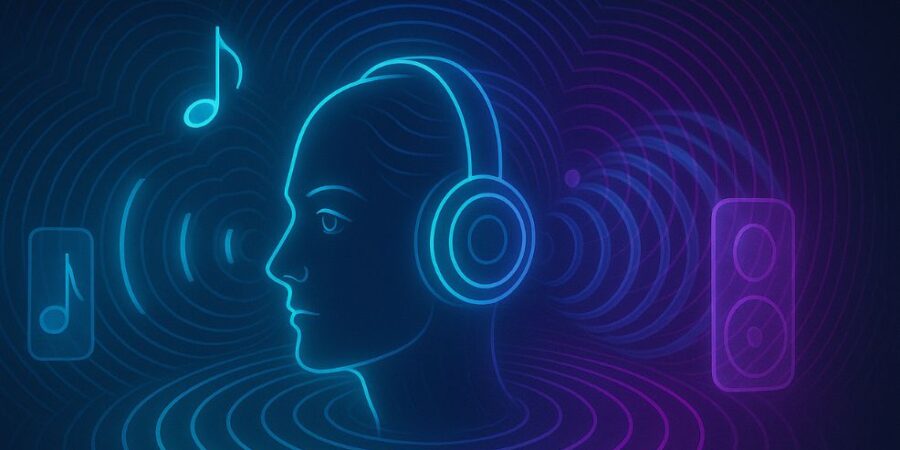
3D audio is a revolutionary sound technology that makes you feel as if audio is coming from all around you – above, below, in front and behind – instead of just stereo left and right. In a 3D audio mix, every sound can be placed in a virtual 3D space, so your brain believes you are inside the scene. This creates a sense of presence and realism, whether you’re listening through headphones or surrounded by special speakers. With the rise of virtual reality (VR), augmented reality (AR) and immersive media, 3D audio has become a key ingredient for powerful, moving experiences. It allows creators to surround you with sound in ways that mirror real life, tapping directly into your emotions and memories. Emotions Market – a platform dedicated to multisensory, emotion-driven technology – highlights how 3D audio can make stories and games more visceral and mood-enhancing. In this post we explore what 3D audio is, how it works, where it’s used, and why it affects us so deeply.
What is 3D Audio?
In simple terms, 3D audio (sometimes called spatial audio or immersive sound) is any audio format that lets sounds come from around the listener in three dimensions. In the real world, sounds reach our ears from different directions; for example, a bird chirping above and to your left reaches your left ear slightly sooner than your right. 3D audio recreates those cues digitally so you can sense where each sound originates. Unlike traditional stereo (left-right) or even standard surround sound, true 3D audio can position sounds at any point in the space, including overhead or beneath you. When done well, it tricks your brain into perceiving a realistic sound environment. It’s what makes some movies and games feel “you are there,” and it can make simple experiences more emotional: for example, hearing a whisper behind you in a dark VR room can be truly startling.
This emerging audio field has grown hand-in-hand with new technologies. Game consoles, smartphones, and VR headsets now support advanced 3D audio rendering. Major streaming platforms (like Apple Music and Tidal) even offer “spatial audio” tracks. Meanwhile, new formats like Dolby Atmos and Sony 360 Reality Audio bring object-based sound to cinemas, headphones, and even live concerts. Essentially, 3D audio is about creating realistic and immersive soundscapes that engage our sense of space and thereby enhance any media or experience. As the Emotions Market platform emphasizes, this technology opens up creative ways to influence how we feel – from excitement and fear to peace and comfort – just by surrounding us with carefully designed sound.
Types of 3D Audio Technologies
There are several ways to create 3D audio, each with its own strengths. Some of the main approaches are:
- Binaural Audio: This method uses two microphones placed where human ears would be (often on a dummy head). When recorded and played back through headphones, binaural audio preserves tiny time delays and volume differences between the ears. The result is a remarkably realistic sensation of sound localization. For example, if a sound is recorded just to the left of the dummy head, you’ll perceive it coming from your left when wearing headphones. Binaural recordings are popular for ASMR (autonomous sensory meridian response) videos, virtual tours, and any application where the listener uses headphones. They work best for creating a personal, headphone-bound experience of 3D sound.
- Ambisonics: This technique captures sound from every direction around a single point. Special microphone arrays or multi-channel setups record an environment as a full 360° sphere of audio. The raw ambisonic recording can then be “decoded” in software to any number of playback channels, from headphones to large speaker rigs. Ambisonics are widely used in VR and 360° video because the recorded sound field can rotate and adapt as the viewer moves or turns their head in the virtual space. In practice, an ambisonic system might record birds chirping above, traffic noise to the front, and people chatting on either side, all as part of one spherical soundfile. This makes it ideal for immersion: no matter which way you face in a VR forest, the sounds correctly adjust.
- Spatial / Object-Based Audio: Unlike the previous methods, spatial audio often involves treating each sound (or “audio object”) separately. Formats like Dolby Atmos, MPEG-H, or Sony’s 360 Reality Audio let engineers place individual sounds (voices, music instruments, sound effects) at exact coordinates in 3D space. A speaker system with height channels or a virtual surround system in headphones can then project each object so it appears at the right location. For example, in a movie, a plane could sound like it’s flying overhead and passing from left to right. Video games and cinemas frequently use this object-based approach. It offers precise control: sounds can move dynamically, and the system can adapt if your setup has fewer or more speakers.
- Traditional Surround Sound (5.1, 7.1, etc.): While not full 3D (as they mostly cover a horizontal circle), conventional surround sound systems are a stepping stone. A 5.1 system has speakers to the front, sides, and rear, giving a sense of space around the listener on one plane. Some newer home and cinema systems add ceiling speakers (creating 7.1.4 or Atmos setups) to introduce height. This expanded surround with overhead channels begins to feel 3D. However, surround formats are fixed installations, whereas modern 3D audio aims to deliver similar effects even through headphones or reconfigurable playback.
Each approach has its niche. Binaural audio is easiest for headphone experiences and cheap recording, but it locks you into headphone playback and can vary in realism depending on your ear shape. Ambisonics is flexible and great for VR scenes, since the audio can follow head movements. Object-based audio is powerful for theaters or advanced home setups and is increasingly supported on phones and tablets via software. In practice, content creators choose based on the medium: a VR meditation app might use ambisonic nature recordings, while a blockbuster film might mix in Dolby Atmos for theaters and downmix to stereo or Atmos headphone tracks for streaming.
3D Audio in Different Industries
3D audio is not just a cool technology; it’s transforming many industries by making experiences more immersive, engaging, and emotionally powerful. Here are some of the key fields embracing 3D sound:
- Entertainment (Films, Music, Events): Movie theaters have used surround sound for decades, but newer releases now add overhead speakers or object-based Atmos tracks. Blockbuster films (like recent sci-fi, fantasy, and horror movies) use 3D audio to put you in the scene: imagine feeling rain falling from above or hearing creatures crawl behind you. Concerts and music festivals sometimes use spatial audio for live shows, and streaming services let listeners enjoy albums remixed in 3D formats. Even music recordings are adopting 3D; artists release special versions of songs in Dolby Atmos or Sony 360 Reality Audio so fans can feel surrounded by the band. Live events, theme park attractions, and immersive theater performances all use spatial audio to tighten the bond between the audience and the story.
- Gaming: Video games were one of the earliest adopters of 3D audio. Modern game engines include built-in spatial audio so players hear enemies, vehicles, and effects from the correct directions. For instance, in a shooter game, you can pinpoint footsteps behind you, or in a horror game, a whisper can circle your head. VR games take this even further by adjusting audio as you move your head. A famous example is Hellblade: Senua’s Sacrifice, which used binaural recording to simulate the main character’s hallucinations – players hear voices that seem to shift around them, creating an intense psychological effect. Games like Resident Evil 7 (in VR mode) and many VR shooters and puzzle games rely on precise 3D audio for both realism and gameplay mechanics. Gamers with headsets notice how spatial sound can improve reaction times and immersion: finding hidden items or surviving ambushes becomes more intuitive when sound comes from the right direction.
- Wellness and Therapy: Calm, relaxation, meditation, and therapeutic experiences are fertile ground for 3D audio. Wellness apps and VR experiences often use nature soundscapes – like a forest at dawn or a gentle ocean – recorded in 3D to help listeners feel tranquil. The added realism of hearing wind rustle overhead or waves lapping at your feet can deepen relaxation far more than plain stereo. In therapy, VR environments equipped with 3D audio are used to treat phobias (like fear of flying, heights or spiders) by safely exposing patients to sounds that mimic reality. Studies have even explored how 3D audio can improve focus in mindfulness exercises: by immersing the user’s attention in a full sound environment, internal distractions fade. Moreover, musicians and sound healers craft 3D sonic experiences (using singing bowls, chimes, or ambient drones) that claim to promote emotional well-being. In short, the wellness industry leverages 3D sound to make calming exercises more convincing and to evoke specific emotional states – joy, awe or calm – through sound.
- Virtual Reality (VR) and Augmented Reality (AR): Perhaps the most obvious domain, VR and AR rely on 3D audio to create believable virtual worlds. When you wear a VR headset, any mismatch between visual and audio cues breaks the illusion. Thus VR platforms (Meta Quest, PlayStation VR, HTC Vive, etc.) all integrate spatial audio engines. For example, if a dragon roars above in a VR game, spatial audio makes it sound convincingly overhead. AR devices like the Apple Vision Pro or Microsoft HoloLens use spatial audio to anchor virtual sounds to real locations: a virtual pet might sit on your right and its meow will seem to come from that spot. Beyond games, VR training simulators (for pilots, surgeons or soldiers) use 3D audio for realistic environments. AR navigation apps on smartphones can play sound cues that seem to come from the direction you need to walk. Essentially, any application where digital sounds must blend with real life needs 3D audio to feel natural.
- Retail, Marketing and Live Events: In retail spaces and live experiences, spatial audio is starting to be used to grab attention or create memorable atmospheres. For example, a brand launch or art installation might use 3D soundscapes to immerse visitors – imagine a 360° audio dome in a mall where shoppers hear different music as they move around. Some stores experiment with directional speakers or headphones for personalized ads or ambient effects: one zone might softly play birdsong while another plays gentle music. Live concerts, sports stadiums, and theme parks also use 3D sound. In marketing, companies create AR ads with spatial audio – for instance, an AR game on your phone that includes 3D sound effects tied to real-world locations. While still emerging, these uses show how 3D audio can turn ordinary spaces into emotionally charged environments.
Across all these fields, the common theme is that 3D audio makes experiences more natural and engaging. By mimicking how we actually hear in the real world, it draws us into whatever is happening – whether that’s a story, a game, or a relaxation exercise.
Benefits of 3D Audio
The advantages of 3D audio are wide-ranging, especially when it comes to emotional and psychological impact. Key benefits include:
- Deeper Immersion and Realism: By surrounding the listener with sound, 3D audio creates a feeling of being inside the scene. This level of realism can make content far more convincing. For example, a war movie with 3D bombs and bullets buzzing around feels much more intense than one with flat stereo. This immersion can also increase enjoyment: many gamers report that headphones with spatial sound make them feel fully engaged in the game world.
- Enhanced Emotional Impact: Sound is a powerful emotional trigger. A sudden sound behind you can induce fear, and a soft melody enveloping you can bring calm or joy. 3D audio amplifies these effects by using our natural spatial hearing. Storytellers and therapists exploit this to guide feelings: a whisper close to the ear feels intimate or eerie, while echoes from far away feel lonely or grand. For instance, an immersive VR story might use subtle ambient sounds to relax you or sharp noises to startle you at key moments, steering your emotions non-verbally.
- Spatial Awareness and Presence: With 3D audio, users can instinctively tell where sounds originate. This is not just a cool trick – it has practical benefits. In training simulations (like flight or battlefield sims), hearing directionality can be crucial for situational awareness. Even for everyday uses, people with hearing difficulties may find it easier to focus on one source of sound (like a voice) if they can perceive its location, although true accessibility benefits are still being explored.
- Improved Engagement and Memory: Studies suggest that immersive audio can make experiences more memorable. The human brain tends to retain vivid, multi-sensory events better. If a learning app uses 3D audio to place information around the listener (say, numbers or letters floating in space with sound cues), it can help the material stick. Similarly, advertisements that use spatial audio are thought to capture attention more effectively.
- Therapeutic and Wellness Effects: For relaxation and therapy, 3D soundscapes can reduce stress. Calming nature sounds in 3D can actually lead to measurable changes in mood – people often report feeling more relaxed and focused. Emotional resilience can be boosted by guided meditations using spatial audio. Even at an emotional level, being “surrounded by warmth” in sound (think soft music enveloping you) can trigger feelings of safety or happiness.
- Creative Storytelling and Design: From a creative standpoint, 3D audio unlocks new ways to tell stories. Filmmakers, game designers, and educators can direct your attention by placing sound objects in space. The sky is literally the limit: a composer could swirl sound sources around you to create choreography between music and story. This novelty can make experiences stand out and leave a lasting impression.
In summary, 3D audio’s benefits are especially about connection and presence. It connects our minds to the content more fully by using the spatial dimension of sound. Emotionally, that can translate to stronger feelings, whether it’s excitement, calm, or empathy.
Drawbacks and Limitations of 3D Audio
Despite the many advantages, 3D audio also has some challenges and limitations:
- Equipment and Setup Requirements: To experience high-quality 3D audio, one often needs specialized equipment. Binaural recordings require headphones for the effect to work, and object-based audio may need an Atmos-capable speaker system or a device that can simulate it. Not everyone has these setups, which means many listeners still get a down-mixed stereo version. For creators, using ambisonic microphones or mixing in Dolby Atmos requires additional hardware and expertise.
- Quality Variability: If 3D audio is not done correctly, it can sound unnatural or even disorienting. Our brains are sensitive to errors in spatial cues. For example, if a sound meant to be behind the listener is slightly mismatched in timing or level, it may break the illusion or be distracting. Personal differences in ear shape mean that generic binaural recordings won’t be perfect for everyone. Some systems attempt to use custom head-related filters, but that is complex.
- Technical Complexity: Creating and mixing spatial audio is more complicated than stereo. Sound engineers need to think in 3D space, place many sounds individually, and test on various playback systems. This requires new skills and software tools. It also often means larger file sizes or more processing power, which can be a problem for streaming or mobile apps with bandwidth constraints. Real-time 3D audio (as in games or VR) demands more CPU/GPU resources to compute accurate reverberations and sound movements.
- User Comfort: Some users may find extended use of 3D audio devices uncomfortable. For headphone-based experiences, wearing headphones for long periods can cause fatigue or ear discomfort. In VR, rich 3D audio sometimes contributes to motion sickness or cognitive overload, especially when combined with intense visuals. There is also a learning curve: listeners might find it odd at first to search for sounds in space, or some people with auditory processing issues might feel overwhelmed by complex soundscapes.
- Limited Content and Standards: While growing rapidly, not all content is available in 3D audio. Most movies, music tracks, and videos are still in stereo. Even for those in spatial audio, not every device or platform supports every format. For example, Apple Music’s Spatial Audio uses a specific format for AirPods, while Netflix might stream Dolby Atmos. A spatial mix made for one ecosystem may not translate perfectly to another. Until standards become truly universal, some content will inevitably lose part of its 3D effect on certain devices.
- Privacy and Social Isolation: This is more a consideration for users. If people constantly use headphones or headsets to enjoy 3D audio, it can isolate them from their actual surroundings. They might be unaware of someone calling them or have less interaction with real-world sound cues, which can have safety or social downsides.
Overall, the drawbacks often come down to accessibility and practicality. The technology is still maturing. As hardware becomes cheaper and more ubiquitous (for example, most new smartphones support at least basic spatial audio), some of these limitations will fade. But content creators and platforms will need to continue investing in 3D audio tools and education for audiences to fully reap the benefits.
How 3D Audio is Created: Recording, Hardware, and Software
Producing 3D audio involves a combination of clever recording techniques, specialized hardware, and powerful software tools. Here’s a closer look at how creators bring spatial sound to life:
- Recording Techniques: One way to capture 3D sound is through specialized microphones. Binaural recording uses a dummy head or two microphone capsules placed at ear distance (sometimes even human ear molds) to mimic how we naturally hear. The dummy head has a pinna (ear shape) and a torso that adds the natural filtering that our body provides. When you listen back on headphones, the sounds have realistic directionality. For ambisonics, an array of several microphones oriented in different directions (sometimes in a tetrahedral or spherical rig) records all incoming sound. Each channel captures a different spatial component, and later software combines them into a surround field. For controlled studio recordings, engineers might place multiple spot mics and then use software to pan them dynamically in 3D space.
- Hardware and Playback: On the output side, headphones are the simplest way for individuals to experience 3D audio – most headphones can render binaural or object-based spatial audio with the help of processing. However, dedicated hardware can enhance the experience. For example, Dolby Atmos-enabled speakers (including soundbars with up-firing drivers, or cinema speaker setups) can physically place sounds in a room. VR headsets like the Meta Quest or PlayStation VR come with built-in spatial audio engines that map sound to your head movements. New headsets like Apple’s Vision Pro have sophisticated audio chips and head-tracking to anchor sounds in a room. Some companies also make specialty 3D audio speakers that focus sound in tight beams to create virtual sound objects in space without headphones (often called “sound domes” or “wave field synthesis” systems).
- Software Tools and Engines: Behind the scenes, software is doing the heavy lifting. Digital Audio Workstations (DAWs) like Pro Tools, Logic Pro, or Reaper now have 3D audio mixing plugins that let engineers pan sounds in 3D space. There are dedicated plugins for ambisonic conversion and HRTF processing (HRTF stands for Head-Related Transfer Function, which are algorithms that mimic how ears perceive sound direction). On the game and VR side, audio middleware like FMOD and Wwise support spatial sound, and game engines (Unity, Unreal Engine) have built-in 3D audio capabilities. There are also cloud and AI-based tools emerging (for example, Microsoft’s Sonora) that can generate immersive soundscapes dynamically. For consumers, apps and phones rely on software: Apple’s spatial audio uses special processing on iOS devices, and Google and others use SDKs like Google Resonance Audio to render 3D sound in mobile apps.
To give a concrete example, imagine you want to create a 3D audio experience of walking in a city. You might use an ambisonic recorder to capture the city ambience all around you – cars, people, birds. Then, in post-production, you load that recording into a DAW as an ambisonic track, which can be rotated and even slightly changed for effect. If you also want a specific event, like a passing ambulance, you might record an ambulance siren on a track and use spatial panning so that when played back, it seems to travel by you. Finally, you export the mix in a format that your target device can use – maybe as a binaural mix for a meditation app or as an Atmos file for a VR app.
In short, creating 3D audio is about capturing or simulating the rich spatial cues of real-world sound and then using hardware or software to deliver those cues accurately to the listener’s ears. As technology advances, the tools are becoming easier to use, so even independent creators can experiment with immersive sound.
3D Audio’s Emotional and Psychological Effects
Sound profoundly affects how we feel. It can soothe us, excite us, or even trigger fear. 3D audio taps into this power by making sound experiences more immediate and lifelike. Here’s how immersive audio can influence emotions and improve well-being in various contexts:
- Meditation and Mindfulness: In meditation or relaxation apps, 3D audio creates a sense of space that helps calm the mind. For example, imagine a guided meditation set in a virtual forest: with spatial audio, birds chirp from all around, a stream babbles to your right, and leaves rustle overhead. This enveloping sound environment can make your mind feel “inside” that peaceful place. Practitioners often report that such experiences deepen their focus and slow their breathing more effectively than flat audio. Some VR meditation programs have shown that listeners become more aware of their own breathing and bodily sensations when external 3D audio fills their awareness, effectively quieting their inner chatter.
- Stress Relief and Therapeutic Immersion: Therapists and wellness centers have begun using immersive soundscapes to reduce anxiety. For example, a person with a fear of flying might be gradually exposed to the sounds of an aircraft cockpit or engine in a VR simulation, with spatial audio making the experience realistic but controlled. Over time, this can help lessen their fear in real life. Similarly, apps for sleep or relaxation use binaural “sound baths” (tones and vibrations) to induce a meditative state. In these contexts, the 3D aspect (the sound seeming to move around or come from specific points) makes the experience more engaging and helps distract the mind from stressors.
- Immersive Storytelling and Empathy: When 3D audio is used in narratives – whether in games, films, or VR stories – it can evoke empathy and strong emotions. For instance, if a character in a story whisper directly into your “ear” via binaural recording, it can feel very personal and intense. In horror VR experiences, having an ominous sound circle behind you can induce real fear. Conversely, in a romantic or uplifting scene, soft music swelling from all around can amplify feelings of joy or comfort. By placing the listener at the center of the story’s sound design, creators can forge a deeper emotional connection. Many storytellers believe this makes the audience more emotionally involved in the plot.
- Enhanced Music and ASMR: Music experienced in 3D can also feel emotionally richer. Some listeners say that spatial audio makes them “feel” the music more, as if they’re in the concert hall or right next to the band. On platforms like Spotify and Apple Music, songs mixed in Dolby Atmos often highlight subtle background instruments or vocals that were less noticeable in stereo, creating a new listening experience. ASMR enthusiasts similarly find 3D audio powerful: the tingling sensation of ASMR (sometimes used to relax or sleep) is often intensified by binaural tracks where whispers and sounds move around the head. The tickle or thrill people feel from ASMR is a clear example of an emotional/physical response to spatial sound.
- Focus and Cognitive Effects: Beyond direct emotions, 3D audio can help with attention and focus. In a noisy world, spatial audio can create a “bubble” of sound that shields the listener. For instance, some people use 3D “concentration” soundscapes (like a coffee shop environment or gentle rain) that seem to surround them, aiding in tasks or study. Anecdotally, users report that this ambient immersion reduces distractions and can improve mood, making work or study feel less stressful.
In summary, 3D audio can move us by making experiences more tangible. It affects our emotional state by engaging the natural way we process sound. Whether it’s helping a person feel at peace, spiking adrenaline in a game, or evoking nostalgia through a familiar spatial sound, immersive audio can be a powerful tool for emotional well-being. The Emotions Market platform recognizes this connection between technology and emotion: many of the experiences listed on Emotions Market show how sound design, combined with AR/VR, is used intentionally to influence mood and memory.
Examples of 3D Audio Apps, Products, and Platforms
The promise of 3D audio is already out in the world through various products and apps. Here are some real-world examples illustrating how 3D sound is being used today:
- Gaming and VR Titles: Many popular video games now include 3D audio. As mentioned, Hellblade: Senua’s Sacrifice is famous for its use of binaural audio to create an unsettling atmosphere. Other titles like Resident Evil 7 (VR version) or Beat Saber (VR rhythm game) rely on spatial cues. VR platforms (Meta Quest, PlayStation VR2, SteamVR) have built-in 3D audio support, so thousands of VR experiences – from explorations of virtual worlds to horror escape rooms – use spatial sound. Multiplayer games like Among Us VR use 3D audio so players can hear crewmates moving around you realistically.
- Music Streaming Services: Mainstream music platforms offer 3D audio tracks. Apple Music advertises Spatial Audio with Dolby Atmos on many albums, making instruments and vocals float around the listener’s head. Spotify has begun rolling out Dolby Atmos tracks to subscribers. Amazon Music HD and Tidal also have 3D/Atmos selections. Listeners can use any compatible headphones to hear remixes that surround them with music. Certain artists even tailor albums specifically for this format, providing an immersive listening experience.
- Cinema and Home Theaters: Dolby Atmos has been integrated into thousands of movie theaters worldwide, giving audiences overhead and surround sound effects. On the home front, soundbar systems and AV receivers support Atmos and DTS:X, making it possible to experience some 3D audio at home. Blu-ray discs and streaming services (Netflix, Disney+, Apple TV+) now offer many movies and shows with Atmos audio. For example, Disney+ streams Star Wars films in Dolby Atmos so explosions and voices move around your living room if your setup allows it.
- AR/VR Platforms and Apps: The new Apple Vision Pro headset (released 2024) emphasizes spatial audio that tracks your head and hand movements, blending digital content with physical space. Google’s AR and VR efforts (like Google Cardboard and Daydream) also supported basic spatial audio for years. Oculus (Meta) platforms have social apps like Horizon Worlds where avatar voices and environmental sounds are spatial. Education and training apps on VR headsets (like medical or flight simulators) use 3D audio to create realistic drills. Even smartphone apps with AR features (like Pokémon Go) can use stereo panning to suggest a creature’s location relative to the user, though this is simpler stereo rather than full 3D.
- Meditation and Wellness Apps: Apps such as Calm or Aura offer meditation sessions with 3D soundscapes – for example, a “mountain retreat” session might use spatial audio to place the user in a tranquil landscape with birds chirping from the canopy above and water flowing nearby. Guided Meditation VR (available on Oculus) is a notable app where users enter virtual environments (like a Zen garden or starlit sky) with full 3D audio. There are also dedicated 3D sound healing apps like Endel, which generates personalized ambient sounds (claimed to be in 3D) to improve sleep and focus.
- Live and Artistic Installations: Some art galleries and exhibitions use 3D sound. For instance, a 3D audio installation might put visitors inside an audio artwork that surrounds them with different sound sources as they walk around a space. Museums sometimes use spatial audio to add realism to exhibits (like hearing ancient marketplace sounds coming from all around). There are also live concerts using tech like spatial sound (Yamaha had a Sound Field microphone used in some live jazz recordings) and festivals exploring immersive audio with multi-channel speaker setups.
- Smart Devices and Headphones: Modern headphones often come with “3D audio” modes. Apple’s AirPods Pro (and many Android earbuds) support head-tracking spatial audio for certain video content on phones. Gaming headsets may feature 7.1 virtual surround or Atmos for headsets. Smart TVs and game consoles support spatial audio output. Even smartphones themselves can apply HRTF processing on the fly for some content.
These examples show that 3D audio is already mainstream in many ways – from the movies we watch to the games we play. The technology is continually expanding into new products. For anyone interested in exploring more immersive sound experiences, the Emotions Market platform collects AR/VR and 3D tech projects under its 3D Experiences category. This includes demos and sessions where creators use 3D audio for storytelling, wellness, or just for fun. Checking out Emotions Market’s 3D Tech Experiences – 3D Experiences page can give you an idea of how 3D audio is being applied in cutting-edge ways that connect with human emotions.
Looking Ahead: The Future of 3D Audio
3D audio is still rapidly evolving. As hardware and software improve, we can expect even more convincing and accessible immersive sound. Future developments might include personalized HRTFs (so spatial audio can be tuned to your exact ear shape), lighter headphones optimized for head-tracking, and AI that generates adaptive soundscapes on demand.
For consumers, this means richer movies, games, and even everyday apps (like navigation or virtual meetings) that use sound in smarter ways. For creators and industries, it opens new avenues to influence mood and perception without words or visuals. In marketing, music, education, therapy and entertainment, designers will increasingly think “360” and involve our ears in addition to our eyes.
Crucially, platforms like Emotions Market remind us that technology is ultimately about experience and feeling. By harnessing 3D audio, developers can craft emotional journeys – whether it’s a thrilling VR adventure, a peaceful meditation, or a brand experience that moves you – grounded in how humans naturally interact with sound. The result is a more engaging, empathetic, and multi-sensory world.
As more people try these experiences, we’ll all likely find new ways that 3D audio can surprise and comfort us. So plug in those headphones or find a 3D audio demo near you – and listen to the future of sound surround you.

Leave a Reply