
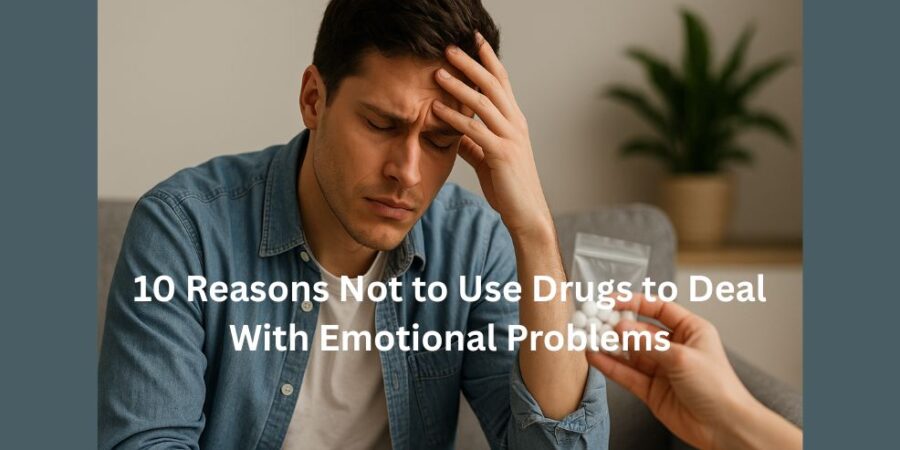
Life can be really hard sometimes. When feelings of sadness, anxiety, or stress become overwhelming, it’s natural to look for relief. Some might reach for drugs or alcohol to escape the pain. But as tempting as that quick fix seems, it usually backfires.
In this article, we explore ten important reasons why using drugs to cope with emotions does more harm than good. Each reason below is grounded in psychological insight and understanding. Our goal is to help you see healthier ways to manage your feelings and empower your emotional well-being.
1. Temporary Relief, Lasting Harm
Using drugs might feel like it takes the edge off pain at the moment. You might experience a burst of calm or even happiness right after using. But this relief is only temporary. Your emotions and problems don’t disappear; they’re just pushed aside for a little while.
Eventually, the drug’s effect wears off, and the original pain often comes back even stronger. Your body and brain can go into a kind of rebound. For instance, many substances flood the brain with “feel-good” chemicals like dopamine. When the drug wears off, your brain might feel depleted, and normal feelings of sadness or anxiety can feel even deeper than before. What started as a brief escape ends up prolonging the struggle.
2. Hijacks Your Brain’s Balance
Every brain has a natural chemical balance that helps regulate mood, motivation, and stress responses. Drugs disrupt this balance by overstimulating or suppressing certain neurotransmitters. At first, that flood of chemicals might feel great—you have an instant “high” or sense of relief.
However, the brain is very adaptive. It quickly tries to compensate for this artificial surge. Over time, you may find that you need the drug just to feel “normal.” In effect, the drug hijacks your brain’s reward and stress systems. Without the substance, your natural mood regulation becomes dulled. This means everyday pleasures may feel muted and low moments can feel heavier, all because your brain has begun to rely on the drug instead of your own coping mechanisms.
3. Numbs Feelings and Hinders Growth
Painful emotions—like grief, anxiety, or anger—serve a purpose. They’re signals that something important needs your attention. Using drugs to numb these feelings is like turning down the volume on an alarm that’s warning you of danger.
When you silence your emotions this way, you miss what they have to teach you. Every time you work through a difficult feeling, you learn about yourself and develop better coping skills. But when drugs block those feelings, your mind never learns how to handle them. Over time, you may find it harder to cope with stress or setbacks at all, because you’re used to “escaping” instead of adapting. Building real emotional resilience means confronting feelings, not avoiding them.
4. Spirals Into Dependency
It can be hard to stop at “just this once.” After the first use, your brain starts to remember that feeling and craves it. This is the beginning of tolerance: you need more of the substance to get the same relief. With every use, the cycle of craving and relief can become stronger.
Soon, you’re not just coping with the original stress or sadness; you’re also coping with withdrawal. Your mood might plummet or you may feel anxious when the drug leaves your system, which pushes you to use again. In this way, you trade one type of pain for another. Instead of solving the original emotional problem, you add a new problem—dependency.
5. Backfires on Anxiety and Depression
Many drugs and alcohol claim to be relaxing or mood-lifting, but they often do the opposite in the long run. Consider alcohol, which is a depressant. It might make you feel more confident or at ease initially, but it ultimately lowers the brain chemicals that stabilize mood. After the buzz wears off, anxiety and depression tend to rebound even stronger.
In fact, using drugs or alcohol can intensify the very feelings you hoped to escape. The impact of substances on brain chemistry can trigger mood swings, increased anxiety, and deeper depression. Psychologically, altering your brain’s delicate chemistry may give a fleeting lift, but it usually amplifies emotional distress later. You end up chasing relief with more substance, which only deepens the emotional valleys.
6. Clouded Thinking and Risky Choices
When you’re under the influence, your mind literally works in slow motion. Drugs impair the brain regions responsible for judgment, planning, and impulse control. Suddenly, decisions that once seemed obviously risky no longer trigger the same warning bells.
This clouded thinking can lead to dangerous consequences. You might act on feelings or impulses that you would normally control, like getting into fights or unsafe situations, or making poor financial or legal choices. For example, driving while impaired can turn a minor problem into a life-altering crisis. These mistakes add layers of stress, guilt, or trauma that make your original emotional issues even harder to manage. In short, drugs often swap one problem for another, creating chaos instead of calm.
7. Strained Relationships and Isolation
Emotional problems are hard enough to bear on your own, and drugs tend to push people away when you might need them the most. You might feel ashamed of your drug use or choose to hang out only with others who do the same, distancing yourself from supportive people. Alternatively, you may hide what you’re feeling, building a wall between you and loved ones.
From a psychological viewpoint, human connection is a key source of comfort and healing. When your relationships become strained, feelings of loneliness and misunderstanding often increase. The people who care about you may not know how to reach you anymore. This isolation feeds on itself: feeling alone can increase anxiety or sadness, which may lead you to use drugs again to cope. In reality, open support and honest relationships are powerful shields against emotional pain, but those shields can break down when drug use or isolation takes over.
8. Damages Self-Esteem and Confidence
Using drugs to cope can create a painful internal conflict. On one hand, you might feel relieved in the moment; on the other hand, you may feel guilty or disappointed for relying on it. This can deeply hurt your self-esteem. You may start to believe you’re not “strong” enough to handle life’s challenges without a chemical crutch.
When your self-confidence takes a hit, it fuels a vicious cycle. You begin to doubt your own abilities even in situations unrelated to drugs. Thoughts like “I can’t do this on my own” become self-fulfilling. Psychologically, this loss of self-trust adds emotional weight. Instead of overcoming a problem and feeling proud, you feel ashamed of needing an escape. In turn, that shame often becomes yet another problem to cope with—sometimes with more substance use. And so the cycle deepens.
9. Poor Sleep and Health Decline
Stressful emotions and physical well-being are closely linked. Many substances greatly disrupt healthy body rhythms. For example, alcohol or sedatives might help you fall asleep faster at night, but they break up deep sleep later on. Stimulants like certain drugs can make it hard to sleep at all. When your sleep is broken, you wake up tired, irritable, and far less able to handle emotional challenges.
Chronic substance use can also affect your appetite, energy levels, and overall health. You might find yourself feeling exhausted, achy, or malnourished. These physical problems put more strain on your mental state. Psychology shows that lack of sleep and poor health directly worsen mood and anxiety. Essentially, the drug that seemed to offer relief makes your body weaker and your emotions more chaotic. Your mind needs rest and good nutrition to heal—and drugs steal those resources.
10. Blocks True Healing and Growth
Your emotions, even the painful ones, carry important information about what you need. Real healing happens when you listen to your feelings and address the root causes of your pain. Using drugs is like plastering over a crack in a wall—it might look fine for a while, but the damage is still there underneath.
True coping involves confronting problems and learning from them. Whether it’s talking honestly with someone you trust, practicing relaxation techniques, or finding healthy outlets like art or exercise, each step forward builds real strength. Facing emotions head-on can be scary, but each time you do it without a drug, you prove to yourself that you are resilient. In essence, drugs block the very process that lets you grow. Healing is a journey of understanding and adapting, and each step you take without using substances strengthens your ability to cope in positive ways.
Choosing Healthier Ways to Cope
You’ve just read many reasons why reaching for drugs as an emotional crutch often backfires. These reasons aren’t meant to shame you—they’re meant to shed light on what’s really happening when you self-medicate. It’s completely human to want an escape when you’re hurting. What matters most is knowing that there are other paths forward.
Feeling better without drugs may take effort, but it’s possible and empowering. Everyone’s journey is different, but proven tools exist. Talking about your feelings with a friend, family member, or counsellor can lighten your load. Practicing relaxation techniques like deep breathing, meditation, or yoga can help steady your mind. Getting active—whether it’s going for a walk, playing a sport, or even dancing around your living room—can release natural mood-boosters in your brain. Engaging in hobbies or creative activities can lift your mood naturally. These activities train your brain to cope with stress in healthier ways.
You could also try journaling to sort through your thoughts or spending time in nature to clear your mind. Even something small, like listening to your favourite song or cuddling with a pet, can give you a moment of relief. Each of these actions teaches your brain healthier ways to cope with stress and find positive outlets.
Remember to acknowledge every bit of progress. Each day you face an emotion without relying on a substance is a triumph. If you feel yourself doubting, remind yourself that asking for help is a sign of strength, not weakness. It’s okay to seek support—talking to a trusted friend, joining a support group, or seeing a mental health professional can make a big difference. Recovery and growth take time, and it’s normal to have setbacks. What’s important is to keep moving forward and to be kind to yourself along the way.
You are stronger than you realize. Emotional well-being deserves attention and care, not quick fixes. Every small step—whether it’s getting out of bed, calling someone you trust, or simply reminding yourself that you are worthy of help—is a victory. You have a future ahead filled with real joy and strength that comes from overcoming challenges, not escaping them.
Take things one day at a time and celebrate your wins, no matter how small. You don’t have to go through this alone. You have already taken a powerful step by seeking understanding and help, and that courage will serve you well. You deserve to heal and feel better in real, lasting ways. Believe that brighter days are possible. Gradually, with patience and support, the very challenges you face can become the foundation of greater inner strength. Remember: healthier choices lead to true recovery and a more fulfilling life. You deserve all the support and happiness ahead, and you have the strength to build a brighter future.

Leave a Reply