
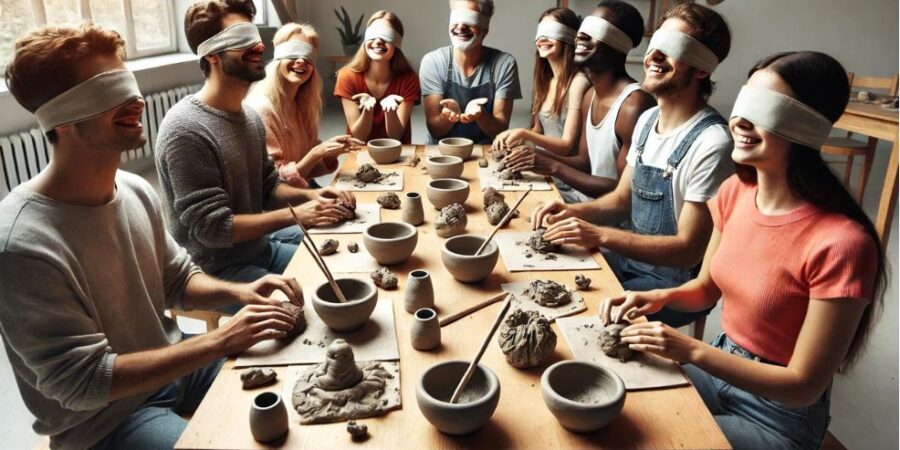
Blindfolded clay making is an extraordinary sensory experience that invites participants to explore the world of creativity, touch, and intuition without the guidance of sight. This unique form of art-making allows individuals to immerse themselves in the texture of the clay, focus on their emotions, and connect with their inner selves. At its core, blindfolded clay making provides a pathway for emotional exploration, stress relief, and self-expression, making it a popular option for those seeking deeper emotional connections and mindfulness practices.
In this blog post, we will explore the different types of blindfolded clay making experiences, the benefits and potential drawbacks, and how these experiences can positively affect emotions and improve emotional well-being. We’ll also delve into how blindfolded clay making—and blindfold experiences in general—can enhance overall life quality.
Different Types of Blindfolded Clay Making Experiences
While the concept of blindfolded clay making remains consistent—creating art without the use of sight—there are various ways to approach and experience it, each with its own focus and outcome. Some of the most common types include:
1. Solo Exploration
In a solo blindfolded clay making experience, the participant works with clay in isolation, relying solely on their sense of touch to shape, mold, and create. This experience often serves as a form of self-expression and introspection, encouraging participants to focus on their inner thoughts and emotions. It is an opportunity to engage with the material without distraction and to explore how the hands, free from the influence of sight, can lead the creative process.
2. Guided Group Sessions
In a group setting, blindfolded clay making becomes a shared experience, where participants work together or alongside one another while blindfolded. These sessions are typically led by an instructor or facilitator who provides verbal cues, guiding participants through the creative process. Group experiences can build a sense of community, empathy, and connection as participants share their emotions and creations once the blindfolds are removed.
3. Collaborative Clay Sculpting
In collaborative blindfolded clay sculpting, multiple participants work together on a single clay piece, often with minimal verbal communication. The challenge of creating something together without sight encourages cooperation and deepens interpersonal connections. It also introduces an element of trust, as participants must rely on each other to contribute to the overall structure without knowing exactly what their partner is doing.
4. Themed Experiences
Themed blindfolded clay making experiences allow participants to focus on specific emotions, memories, or intentions. For example, a session might be centred around “healing,” where participants are encouraged to reflect on past challenges or traumas and express their journey of recovery through the clay. Other themes might include “gratitude,” “inner strength,” or “letting go,” allowing participants to channel their emotions into tangible creations.
The Benefits of Blindfolded Clay Making
Blindfolded clay making offers a wide range of benefits that can improve emotional well-being and enhance the creative process. These benefits extend beyond the physical act of creating art and delve into the emotional and psychological realms.
1. Heightened Sensory Awareness
Without the use of sight, participants rely heavily on their sense of touch, which becomes significantly heightened during the experience. This deepened sensory awareness allows individuals to become more present and mindful, enhancing their connection to the clay and to their own emotions.
2. Stress Reduction
Engaging in a tactile, creative process like blindfolded clay making is a powerful stress reliever. The repetitive motions of shaping and molding clay, combined with the absence of visual stimuli, can calm the mind and reduce anxiety. The process encourages participants to focus on the present moment, leaving behind the worries of the outside world.
3. Emotional Release
Clay has long been used as a therapeutic medium, allowing individuals to express emotions that may be difficult to articulate through words. Blindfolded clay making enhances this effect by removing the critical, judgmental gaze of the eyes. Participants are free to express their emotions—whether joy, anger, sadness, or frustration—through the tactile manipulation of the clay, leading to a cathartic emotional release.
4. Improved Creativity
When sight is removed from the equation, participants are forced to rely on their imagination and intuition, which can lead to unexpected and innovative creations. The process challenges the traditional approach to art-making, allowing participants to explore new ways of thinking and problem-solving. Blindfolded clay making fosters a sense of creative freedom, where mistakes are embraced as part of the journey.
5. Enhanced Emotional Awareness
By focusing solely on the sense of touch, participants often find that they become more in tune with their emotions. The absence of visual distraction allows for deeper self-reflection and emotional awareness. Participants may uncover emotions that were previously buried or unacknowledged, leading to personal growth and healing.
Potential Drawbacks of Blindfolded Clay Making
While blindfolded clay making offers many benefits, there are some potential drawbacks that should be considered, especially for those new to the experience.
1. Frustration and Anxiety
For individuals who are highly reliant on their sight, the experience of being blindfolded may initially cause frustration or anxiety. Some participants may feel uncomfortable or uneasy without the ability to visually assess their surroundings or the progress of their work. This can lead to a sense of helplessness or frustration if participants struggle to achieve the desired outcome.
2. Physical Limitations
Working with clay requires dexterity and hand strength, and not all participants may have the physical ability to manipulate the material effectively. Blindfolding adds an additional challenge, as participants must rely solely on touch, which may be overwhelming for those with limited hand mobility or coordination.
3. Perfectionism
Blindfolded clay making is an experience rooted in letting go and embracing imperfections. However, for individuals with perfectionist tendencies, it may be difficult to release control over the outcome. These participants may struggle with the unpredictability of the process and find it challenging to accept the final product.
Emotional Impact and How It Can Improve Well-Being
Blindfolded clay making can have a profound impact on emotions, particularly in terms of stress relief, emotional awareness, and self-expression. By removing sight from the equation, participants are encouraged to focus on the process rather than the final product, allowing them to engage fully with their emotions.
1. Emotional Freedom
Blindfolded clay making offers a space for emotional freedom, where participants can express themselves without judgment or fear of failure. The tactile nature of the experience encourages individuals to channel their emotions into the clay, creating a tangible representation of their feelings. This process can be deeply therapeutic, offering a sense of release and relief.
2. Mindfulness and Presence
The act of working with clay while blindfolded requires a deep level of focus and presence. Participants must tune into their sense of touch, concentrating on the texture, shape, and form of the material. This mindful approach can help participants break free from the distractions of daily life, leading to a greater sense of calm and emotional clarity.
How Blindfolded Clay Making and Other Blindfold Experiences Can Improve Life
Blindfolded clay making is just one example of how blindfold experiences can enhance emotional well-being. At Emotions Market, we offer a wide variety of blindfold experiences that help individuals explore their emotions, build connections, and improve their overall quality of life.
Sensory Exploration: Blindfolded experiences heighten other senses, making life more vivid and present. Whether it’s through touch, sound, or smell, blindfolded activities push individuals to live in the moment.
Emotional Release: Experiences like blindfolded clay making allow people to release emotions they may not even know they were holding onto, contributing to emotional balance and well-being.
Deeper Connections: Collaborative blindfolded experiences, whether in art or other activities, foster trust, empathy, and connection with others, leading to more fulfilling relationships.
Incorporating blindfolded experiences into one’s life, whether through clay making or other sensory practices, opens doors to self-discovery, emotional release, and personal growth. The unique blend of creativity and sensory engagement in these experiences offers a powerful way to improve emotional well-being and enhance daily life. Explore the wide range of blindfolded experiences on Emotions Market to discover how they can transform your emotional world.

Leave a Reply