
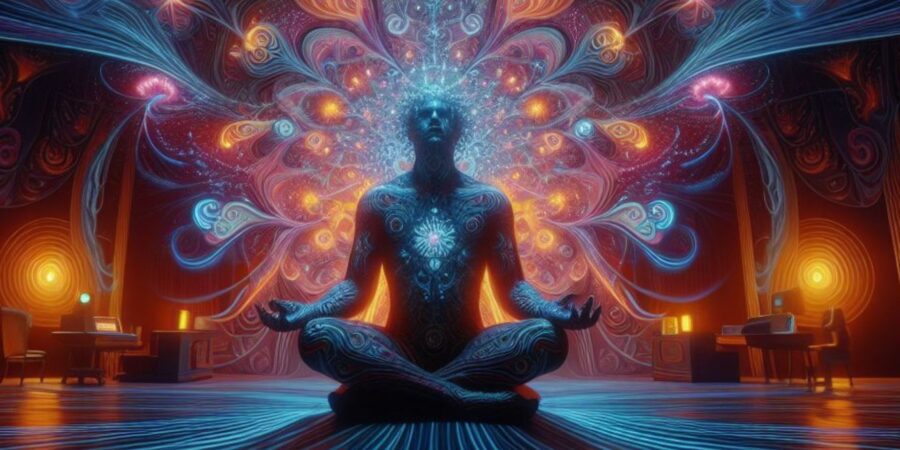
Hypnagogic Light Therapy machines, like the Pandora Star, aim to induce states of consciousness that are similar to those experienced under the influence of psychedelics, but without the ingestion of any substances. These machines work by utilizing flickering lights, usually LEDs, that stimulate the brain through the eyes with specific patterns and frequencies. Here’s a breakdown of the principles behind their operation and the effects they claim to produce:
- Light Stimulation and Brain Waves: The brain operates at different wavelengths or frequencies, known as brainwaves, depending on the state of consciousness (awake, asleep, meditating, etc.). These frequencies range from slow, deep waves to fast, light waves. The flickering light from these machines is said to influence the brain’s electrical activity, encouraging it to align with the frequencies of the light. This process is known as brainwave entrainment.
- Entrainment and Consciousness: By varying the flicker rates, these machines can theoretically guide the brain through different states of consciousness. Slow frequencies may promote relaxation and meditative states, while faster frequencies can lead to heightened awareness or different perceptual experiences. The idea is that by carefully controlling these frequencies, one can induce states of consciousness that resemble those experienced during hypnagogic (the transitional state between wakefulness and sleep) or even mimic the effects of psychedelic substances.
- Psychedelic-like Experiences: Users of hypnagogic light therapy machines report a range of experiences, from seeing vivid colours and patterns to feeling a sense of deep relaxation or even having mystical or profound emotional insights. These effects are somewhat similar to those reported by individuals who have consumed psychedelic substances, albeit typically less intense and without the chemical alteration of brain function.
- Safety and Accessibility: One of the appealing aspects of such technology is its non-invasiveness. Unlike psychedelic substances, which can have lasting psychological effects and are illegal in many places, light therapy machines offer a way to explore altered states of consciousness with fewer legal and health-related concerns.
It’s important to note, however, that while these machines can induce interesting visual and mental effects, the experiences and their intensities can vary widely from person to person. The scientific understanding of these devices and their long-term effects is still in its infancy, and much of the evidence for their efficacy is anecdotal. As with any tool for altering consciousness, users should approach with caution, be aware of personal mental health conditions, and consult healthcare professionals if in doubt.
Psychedelic effects experience Vs psychedelic experiences infused by substances
Hypnagogic light therapy machines and psychedelic substances both offer routes to altered states of consciousness, but they do so through fundamentally different mechanisms and with varying effects, risks, and benefits. Here’s a comparison of the key aspects of psychedelic-like experiences induced by hypnagogic light therapy versus those induced by psychedelic substances:
1. Mechanism of Action
Hypnagogic Light Therapy: These machines use visual stimuli through flickering lights at specific frequencies to influence brainwave patterns, aiming to induce states of consciousness that can be similar to the early stages of sleep or meditation. The experience is primarily driven by external stimulation of the visual cortex and the brain’s response to rhythmic light patterns.
Psychedelic Substances: Substances like LSD, psilocybin, MDMA, and DMT interact with the brain’s serotonin receptors and other neurotransmitter systems. This chemical interaction can lead to profound alterations in perception, thought, and emotion. The effects are more deeply rooted in the brain’s chemistry and can affect multiple sensory and cognitive processes simultaneously.
2. Types of Experiences
Hypnagogic Light Therapy: Experiences may include visual phenomena such as colours and patterns, a sense of relaxation or floating, and sometimes emotional or introspective insights. However, these experiences are generally less intense and encompassing than those induced by psychedelic substances.
Psychedelic Substances: The experiences can be more intense and varied, including profound changes in perception, sense of time, emotional shifts, philosophical or mystical insights, and in some cases, encounters with seemingly autonomous entities or environments.
3. Control and Predictability
Hypnagogic Light Therapy: The experience can be more controlled and predictable, as it is based on predefined settings of the machine, such as flicker frequency and duration. Users can stop the session at any time, providing a level of safety and control over the experience.
Psychedelic Substances: Once ingested, the duration and intensity of the experience are largely out of the user’s control and can vary widely based on the dose, the individual’s mental state, and their environment. This can sometimes lead to challenging or overwhelming experiences.
4. Risks and Side Effects
Hypnagogic Light Therapy: Generally considered safe for most people, though it may cause discomfort or adverse effects in individuals with photosensitive epilepsy or other specific neurological conditions. It’s non-invasive and doesn’t involve ingesting substances, reducing the risk of physical side effects.
Psychedelic Substances: The risk profile is broader, including the potential for psychological distress, intense fear, or paranoia during the experience (often referred to as a “bad trip”). There’s also the risk of exacerbating or uncovering latent psychiatric conditions. However, in controlled therapeutic settings, these risks are mitigated by professional guidance and support.
5. Legal and Accessibility Issues
Hypnagogic Light Therapy: These devices are legal in most places and accessible to the general public, making them a more readily available option for exploring altered states of consciousness.
Psychedelic Substances: Many psychedelic substances are classified as illegal in numerous countries, limiting their use to specific medical or research settings under regulatory approval, which affects accessibility.
6. Long-term Effects and Benefits
Hypnagogic Light Therapy: The long-term effects are not well studied, and while users report benefits such as improved mood or creativity, empirical evidence is limited.
Psychedelic Substances: Research indicates potential long-term benefits for mental health conditions such as PTSD, depression, and anxiety, especially when used in controlled, therapeutic settings. However, there’s also a risk of psychological dependency or misuse in unsupervised contexts.
In summary, while both hypnagogic light therapy machines and psychedelic substances offer pathways to altered states of consciousness, their mechanisms, experiences, and implications differ significantly. The choice between them depends on individual preferences, the desired intensity and nature of the experience, and considerations of safety, legality, and potential health impacts.
Other machines offering psychedelic effects experiences
Apart from the Pandora Star, there are several other devices designed to induce altered states of consciousness or psychedelic-like experiences without the use of substances. These devices mainly use light, sound, or a combination of both to stimulate the brain. Here are a few notable examples:
1. Lucia No. 3 Light Machine
Description: Developed by two Austrian doctors, the Lucia No. 3 uses a combination of constant and flickering white light to stimulate temporary altered states of consciousness. Users report experiences of vivid visual patterns, deep relaxation, and in some cases, mystical or transformative insights.
Mechanism: It combines stroboscopic (flashing) light with constant light to create a unique experience for the user, aimed at inducing a deep meditative state and visionary experiences.
2. Ajna Light
Description: The Ajna Light is designed to facilitate deep meditation and relaxation, simulating a psychedelic journey with its flickering light patterns. It claims to help users access different states of consciousness through brainwave entrainment.
Mechanism: It uses LED lights to produce flickering effects at specific frequencies that can induce brainwave states conducive to deep meditation and exploration of consciousness.
3. Mindfold LED Glasses
Description: These are wearable devices equipped with LED lights that stimulate the eyes with patterns and colours. They are portable and offer a more personal and intimate experience compared to larger stationary machines.
Mechanism: The LED patterns are designed to promote relaxation, meditative states, and for some, psychedelic-like visual experiences through closed-eye visuals induced by the light stimulation.
4. Brain Machine (Mitch Altman’s Design)
Description: This is a DIY project that combines sound and light to induce altered states of consciousness. It’s more accessible in terms of cost and can be personalized according to the user’s preferences.
Mechanism: It synchronizes flashing lights (through LED glasses) with binaural beats, aiming to create a synesthetic experience that leads to relaxation, meditative states, or altered states of consciousness.
5. Holotropic Breathwork
Description: Though not a machine, Holotropic Breathwork is a practice developed by psychiatrists Stanislav and Christina Grof as a substance-free way to access altered states of consciousness. It relies on rapid breathing techniques, evocative music, and bodywork to induce experiences similar to those reported with psychedelic substances.
Mechanism: By altering the balance of oxygen and carbon dioxide in the body through controlled breathing, participants can experience intense emotional and physical sensations, visual phenomena, and profound insights.
These devices and techniques vary widely in their approach, technology, and the depth of the experiences they offer. Some are rooted in scientific principles of neurology and psychology, while others incorporate more holistic or spiritual elements. It’s important for individuals to research and consider their own goals, sensitivities, and medical history when exploring these options, and to approach any form of consciousness exploration with caution and respect for their own well-being. Explore light experiences on Emotions Market if you are willing to try psychedelic effects experiences without the use of substances.

Leave a Reply